




GDI IVD Intake Valve & Turbo Cleaner
Product ID: 82446324
⚡46% deposit removal in 1 hour
🔬150X concentration vs fuel additives
🛠️Easy air intake installation
Buy anything from 5,000+ international stores. One checkout price. No surprise fees. Join 2M+ shoppers on Desertcart.
Desertcart purchases this item on your behalf and handles shipping, customs, and support to KUWAIT.
⚡ Clean valves, faster drives — don’t let carbon slow you down!
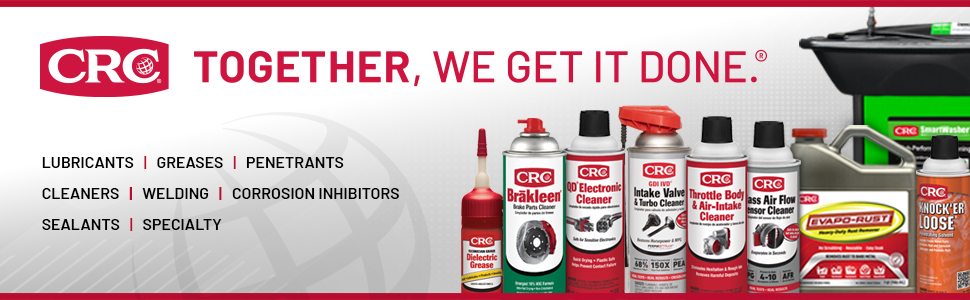
CRC GDI IVD Intake Valve & Turbo Cleaner is a highly concentrated, PEA-based formula designed to dissolve baked-on carbon deposits in GDI and standard fuel-injected engines. Easy to install through the air intake, it removes up to 46% of intake valve deposits within an hour, improving fuel efficiency, engine power, and idle smoothness. With 150X the concentration of typical fuel additives and a strong 4.6-star user rating, it’s a must-have for maintaining peak engine performance.



| ASIN | B00PHNQKR2 |
| Best Sellers Rank | #5,951 in Automotive ( See Top 100 in Automotive ) #52 in Engine & Parts Fluid Cleaners |
| Brand | CRC |
| Customer Reviews | 4.6 4.6 out of 5 stars (1,755) |
| Date First Available | May 14, 2012 |
| Exterior | Machined |
| Is Discontinued By Manufacturer | No |
| Item Weight | 15.2 ounces |
| Item model number | 05319 |
| Manufacturer | CRC |
| Manufacturer Part Number | 05319 |
| Model | 05319 |
| Product Dimensions | 11.1 x 8.3 x 8.1 inches |
| Voltage | 12 Volts |
M**L
Worth the money fixed my misfire
This stuff is awesome takes awhile to get through the bottle but it was worth it I had a intermediate Misfire at idle it got rid of it no more misfire and the car runs what I feel is healthier under acceleration definitely worth them money easy to use
K**L
Great results!
Uses this on my wife's cx9, my cx5, and my trailblazer, with impressive results! Follow the simple directions to a T, and I personally recommend changing sparks plugs after, you burn a lot of crud. Definitely more power, faster acceleration, and even gas mileage has improved. Well worth it, likely to become a part of my yearly tune-up regiment.
E**V
Helps!
I used this this weekend on my 2001 car with 65,000 miles on it, it also has a mpi type of injection instead of the gdi as it is commonly used on. The car did not smoke white once during it's use spraying the production in as some have mentioned but it did idle rough as soon as I disconnected the air intake hose from the throttle body. I don't think the spray itself made the car idle any worse. But when the spraying was done, removed it and reconnected air intake hose and it immediately idled smoothly again and then I shut it off and let it sit for the time required. After that time I took it for a drive which was still smooth, but after a while of driving the check light flashed a few times off and on and then went out. Sometime thereafter the big cloud of white smoke came out of the exhaust and then nothing else out of the normal. Now today, a day later I noticed the car is idling as smooth as it did when it was new and also is very hard to hear running it is so smooth and starting is better too. I have to guess that it did work. It has increased take offs and overall power so I suspect it will affect the gas mileage too, when I check that. Thank you.
R**S
Noticed improvement on 2015 VW beetle but none on 2006 Toyota avalon
I bought 4 cans since I have 4 cars in the family. I used it 1st on daughters 2015 beetle which has 75k miles but still runs great she noticed a slight drop in fuel economy. I removed the MAP & sprayed in that port car ran erratically since I didn’t unplug the MAP. I did get a some white smoke at tailpipe, after 1 hr hot soak drove it for 20 mins didn’t really see any smoke at the tail pipe but car ran fine & it did seem to be more responsive. The next day I changed the oil, filter & spark plugs. The plugs seems clean not much deposits, forgot to take pics of the plugs. On the 2006 Toyota Avalon the car is port injected & I add Berryman B12 every 3 months so it’s always run great. It has 145k mile & at 90k I had the engine pulled out to replace gaskets, VVT supply line with new steel line, spark plugs, drive belts, water pump, engine mounts and host of other wear items. So it’s well maintained, I was hoping this product would get fuel economy back to 32 mpg like 3 yrs ago, but so far no change. Overall I believe this is a good product for GDI & poorly maintained port injection cars
R**E
I'm a mechanic, works great!
Tried this in a 1.6 Hyundai Gamma II GDI engine that they put in the Kia Soul's. (Yes, Hyundai makes a lot of Kia's parts, including that engine). The proper way to clean intake valves on a GDI (direct injection) engine is to REMOVE the intake manifold and walnut-blast the back side of the intake valves. BIG JOB, and not always necessary. I inspected the intake valves with a borescope BEFORE and AFTER I used this product. It cleaned the intake valves very well! I've long used CRC products, and this will be another one I recommend every oil change, because, why NOT! Keep those valves as clean as you can, it will improve gas mileage and prolong the life of your engine. It will prevent carbon build up. NOTE: If your intake valves are too dirty, you will need to remove the intake manifold and clean the proper way. But this product works well, especially if you have a new car and begin using it right away at least every 10,000 miles, or every 2-3 oil changes. On the Kia Soul, I removed the brake booster vacuum line and sprayed the CRC direct injection intake valve cleaner into the system that way. SECOND NOTE: DO NOT SPRAY CRC INTAKE VALVE CLEANER IN THE AIR CLEANER/FILTER BOX, IT WILL DESTROY YOUR MAF (MASS AIR FLOW) SENSOR.
K**N
Cleans GDI Valves
I use this product every 10,000 miles. After applying it, the engine runs much smoother. I can only assume this is the direct result of clean valves. The CDC Valve and Turbo Cleaner is made from the same detergents found in gasoline. In a low pressure fuel injected car, gasoline goes over the valves. High quality gasoline includes detergents to keep the engine clean. Direct Injected cars / trucks put the fuel directly into the cylinder. This means the valves are not cleaned by the detergents in the gasoline. CDC Valve and Turbo Cleaner (V&TC) solves the problem. The first time I applied the product (V&TC), I saw gunk on the rear of my car. This presumably came from the valves. The next time I applied the product, I did not notice the gunk on my car. To me, this is an indication V&TC is working. The first two times, I disassembled the intake to spray V&TC into the intake. The third time, I found a vacuum line (brake booster) and applied the product to the vacuum line. Applying though the vacuum line is the easiest way to spray the product into the upper engine. However, this means only the exhaust side of the turbo is cleaned. I have not removed the intake manifold and used a borescope to inspect the valves. That's a bit more than I want to do. I judge the product on the way my car runs. Based on this, CRC Valve and Turbo Cleaner does its job.
L**H
Worked Great!
My 2017 Honda Accord was chugging badly whenever I tried to pass or went past half way on the throttle. It only had 8k miles on it so I tried everything else first -new air filter, gas treatment - to no avail. I bought can of this and sprayed it thru the intake just past the MAF sensor. Worked good - no more chugging whenever I stepped on the throttle. 6 months later it started doing the same thing and gradually got worse. At 8 months it was horrible - I had to make sure I had plenty of room to pass since it would chug so bad whenever I floored it. This time whenever I ran a can thru it and started the 10 minute highway drive it scared me. As soon as I got on the road and stepped on the accelerator the car choked down and nearly stalled, then it sputtered and a HUGE cloud of smoke exited the rear of the car. The car then picked up and accelerated normally, but my check engine, low tire, and power steering warning lights lit up. The car ran fine however so I continued with my 10 minute drive and by the time I got home it was running like a top - flooring it would immediately push me back in my seat like it should. Got home and disconnected the negative side of the battery for a few seconds and all warning lights disappeared. It has been a week now and it is still running like new. I figured that there was a large amount of carbon that broke loose and hit the combustion chamber causing the huge smoke cloud which messed with the sensors in the catalytic converter and set off the codes. I'm going to get a oil catch can and start using this every 3000 miles or 6 months so I wont have such a build up again. Much cheaper than the $150 my local Honda dealer wanted to clean it out.
A**.
Recommend
It works right away
R**T
Para cualquier motor de Inyección Directa. Gasolina o Diesel
Siguiendo las instrucciones es muy fácil de usar. Asegúrate de aplicarlo por la succión correcta de tu motor, si tienes dudas busca en youtube como hacerlo para tu vehículo en especifico. Lo use hace años en una Mitsubishi L200 2.5 Turbo Diesel, cuando esta tenia 120 mil kilómetros, use dos botes ya que nunca había tenido una limpieza de válvulas y rejuveneció el motor. Y lo acabo de usar en un Subaru 2.0 no turbo con 23 mil kilómetros en el odómetro, y aun con tan pocos kilómetros el resultado de la limpieza de válvulas fue notable. Pienso seguirlo usando cada 20 o 25 mil kilómetros. Si no lo encuentras busca otro producto similar que contenga PEA (Polieteramina) y úsalo de similar manera
A**R
Good quality cleaner!
Works great to clean carbon from valves! Expect a lot of smoke for awhile after applying solvent! Engine runs better! Less hesitation and better gas mileage!
T**T
تجربة المنتج
المنتج مفيد لتنظيف الصمامات ( البلوف ) وايضا تنظيف المحركات بنظام gdi والمنتج يعتبر اقوى ب 150 مرة من منظفات الوقود العادية ، انصح باستخدامه
ر**د
👌🏻
👌🏻
A**C
It works! But scary!
Tried it this morning and to be honest it was kinda scary to use. As you know any foreign chemical inside the cylinder can and will break your engine. My Kia Rondo was suffering from carbon buildup and I was losing a lot of mileage and power during acceleration. Emptied a whole can of it and waited for 1 hour to heatsoak the carbon. So me and the wifey drove around the block then there it was the big puff of white smoke came out of the tailpipe. I thought well its ok as what the reviewers say but the valve knock and the loss of power scared the heck out of me. I actually smokescreened an entire block around our area and people were looking at me saying that my engine is toast. I was quiet and trying to gather my thoughts on what happened as I looked on the dash and the it threw a CEL which I told my wife about it. we were silent and thinking. Me about the car whereas my wife calculating how much we will spend on a whole engine! XD. I pulled over and revved the engine just to remove the smoke and after that I did some spirited driving in one of our main roads and there was a change in acceleration and the car had power on all gears now. It even did a 5 gear uphill which was impossible to do when you have carbon build up. Gas mileage was unbelievable. I got another liter off my range. it used to be 10l/100km now it became 9km/100km city driving. Also about the CEL it went gone after 50 to 80 km of driving. Final Verdict. 10 out of 10 for how the cleaner worked but if you are scared to do it, I suggest ask a professional mechanic to help you. I still have 1 can left and I will use it after a few years but will take apart the plenum chamber to do a thorough clean. I will not spray it again while the engine is running.
Trustpilot
2 months ago
1 week ago