![A History of Ancient Britain - Series 1 [DVD]](https://m.media-amazon.com/images/I/71HtWfgL6cL._AC_SL3840_.jpg)
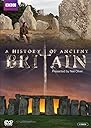
A History of Ancient Britain - Series 1 [DVD]
Product ID: 99571877
Details
- FormatPAL
- LanguageEnglish
- Number Of Discs2
- Runtime3 hours and 54
- Publication DateMarch 7 2011
Buy anything from 5,000+ international stores. One checkout price. No surprise fees. Join 2M+ shoppers on Desertcart.
Desertcart purchases this item on your behalf and handles shipping, customs, and support to KUWAIT.
In this fascinating series, TV historian and archaeologist Neil Oliver (Coast, A History of Scotland) travels the British Isles to tell the story of the very beginnings of our land and its people. The series traces the development of Britain, from the glacial wasteland of 12,000 BC, through the glories of the Stone Age to the magnificence of international Bronze Age society – following the growth of farming and trade; the establishment of homes and hamlets and the sophisticated spiritual life of the country, including the incredible creation of the monument at Stonehenge. In an engrossing series, Neil Oliver travels the length and breadth of the British Isles to explore some of its greatest wonders, discover the significance of renowned and lesser-known monuments and reveal how modern science is solving many ancient mysteries. Contains Four Episodes Review: A Vivid Exploration of Britain's Prehistory - Those of you who enjoyed archaeologist Neil Oliver's excellent A History of Scotland [DVD will savour this story of how Britain came to be forged over thousands of years of ancient history. It's one of the most lucid descriptions of prehistory I have encountered. Neil Oliver's narration helps the past feel present to viewers, Ty Unwin's music is extraordinary, and the cinematography of Britain's landscapes, by Patrick Acum and Toby Wilkinson, is superb. Age of Ice This Paleolithic Age begins with a chilly landscape, when the ice was one kilometer deep over Scotland, and Britain was part of the European peninsula. Neil Oliver shows the gorgeous horse-carved bone and Ibis cave, 14,000 - 15,000 years ago. On the island of Colonsay, in the Scottish Hebrides, during the Mesolithic, 7,000 - 9,000 years ago, 1/3 million pounds of hazelnut shells were piled in mounds from food production. The resourcefulness of people on the islands during the Mesolithic is remarkable. On the other side of Scotland, in the Montrose Basin of the northeast, 6,100 years ago inhabitants did not fare so well, when an enormous landslide in Norway caused a giant tsunami to rush 40 kilometers inland, with massive loss of life, and permanent, large-scale alteration of the geography. Britain became an island. Age of Ancestors Neil Oliver describes this Neolithic Age, visiting the Isle of Mann, and western Ireland, with its expansive Neolithic cattle enclosure complex, dating 5,500 years ago. A delightful moment occurs when Oliver and fellow archaeologist Seamus Caulfield agree, whilst digging peat, that the weather is "truly foul." The Age of Cosmology Neil Oliver describes that during this period, human lives became ruled by sun and stars, with Britain in the throes of a Neolithic revolution. He visits the central fells of the Lake District, with Mark Edmonds, of the University of York. In the Lake District's magnificent landscape, they explore a Cumbrian axe factory, with exquisitely worked and polished stone axes. Then, Oliver takes us to 3,100 BC and the Orkney Islands, and the Neolithic settlement of Skara Brae, which was occupied for 600 years! He discusses stone circles, from Maes Howe, to the Ring of Brodgar, to the Stones of Stennes, and then beyond, to Stonehenge. With Clive O'Gibny, a sea-going Irish "currach" is tested as a means of transport, then Neil Oliver visits Newgrange tomb. Age of Bronze This journey begins with the exploration of ancient mine-shafts in Norfolk; 433 mines for flint dot the landscape. Then ancient copper mining on Ross Island, County Kerry, Ireland, is explored with William O'Brien; see his Ross Island: Mining, Metal and Society in Early Ireland (Bronze Age Studies) . By 2,500 B.C., the Beaker People arrive from Alpine areas; an example is the earliest copper knife, in Wiltshire. Along the Cornish coast, and in Ireland and Scotland, copper and tin are mined and combined, creating Bronze. Metal axes become the norm, and Neil Oliver describes sword casting. The flow of metal and trade created wealth in Argyll, Scotland, in places like Kilmartin, where I have worked; Oliver examines a jet necklace imported from Yorkshire 2,150 years ago. The narrative travels to the marvels of the round-house settlement of Flag Fen, dating from 1,300 B.C., in Cambridgeshire, and we meet another old colleague, Francis Pryor. Twisted yew branches, called "withies" were used in the construction of round-houses, an enduring form of architecture that lasted 1000 years. A poignant site is out on the wonderfully bleak hills of Dartmoor, in Devon, with a complex of field systems and housing on a grand scale that ended when the climate changed again and the soil was depleted. The series is 234 minutes, with English subtitles. I highly recommend this vivid journey through ancient Britain. You'll need a Region-free DVD player. Enjoy! For Britain's post-Roman history, I highly recommend the excellent DVD series Time Team: Unearthing the Roman Invasion . Review: Very good DVD - Very interesting DVD series. Great value for money as well
| Contributor | Neil Oliver |
| Customer Reviews | 4.6 out of 5 stars 325 Reviews |
| Format | PAL |
| Genre | Documentary |
| Language | English |
| Manufacturer | 2entertain |
| Number of discs | 2 |
| Publication date | 7 Mar. 2011 |
| Runtime | 3 hours and 54 minutes |
F**I
A Vivid Exploration of Britain's Prehistory
Those of you who enjoyed archaeologist Neil Oliver's excellent A History of Scotland [DVD will savour this story of how Britain came to be forged over thousands of years of ancient history. It's one of the most lucid descriptions of prehistory I have encountered. Neil Oliver's narration helps the past feel present to viewers, Ty Unwin's music is extraordinary, and the cinematography of Britain's landscapes, by Patrick Acum and Toby Wilkinson, is superb. Age of Ice This Paleolithic Age begins with a chilly landscape, when the ice was one kilometer deep over Scotland, and Britain was part of the European peninsula. Neil Oliver shows the gorgeous horse-carved bone and Ibis cave, 14,000 - 15,000 years ago. On the island of Colonsay, in the Scottish Hebrides, during the Mesolithic, 7,000 - 9,000 years ago, 1/3 million pounds of hazelnut shells were piled in mounds from food production. The resourcefulness of people on the islands during the Mesolithic is remarkable. On the other side of Scotland, in the Montrose Basin of the northeast, 6,100 years ago inhabitants did not fare so well, when an enormous landslide in Norway caused a giant tsunami to rush 40 kilometers inland, with massive loss of life, and permanent, large-scale alteration of the geography. Britain became an island. Age of Ancestors Neil Oliver describes this Neolithic Age, visiting the Isle of Mann, and western Ireland, with its expansive Neolithic cattle enclosure complex, dating 5,500 years ago. A delightful moment occurs when Oliver and fellow archaeologist Seamus Caulfield agree, whilst digging peat, that the weather is "truly foul." The Age of Cosmology Neil Oliver describes that during this period, human lives became ruled by sun and stars, with Britain in the throes of a Neolithic revolution. He visits the central fells of the Lake District, with Mark Edmonds, of the University of York. In the Lake District's magnificent landscape, they explore a Cumbrian axe factory, with exquisitely worked and polished stone axes. Then, Oliver takes us to 3,100 BC and the Orkney Islands, and the Neolithic settlement of Skara Brae, which was occupied for 600 years! He discusses stone circles, from Maes Howe, to the Ring of Brodgar, to the Stones of Stennes, and then beyond, to Stonehenge. With Clive O'Gibny, a sea-going Irish "currach" is tested as a means of transport, then Neil Oliver visits Newgrange tomb. Age of Bronze This journey begins with the exploration of ancient mine-shafts in Norfolk; 433 mines for flint dot the landscape. Then ancient copper mining on Ross Island, County Kerry, Ireland, is explored with William O'Brien; see his Ross Island: Mining, Metal and Society in Early Ireland (Bronze Age Studies) . By 2,500 B.C., the Beaker People arrive from Alpine areas; an example is the earliest copper knife, in Wiltshire. Along the Cornish coast, and in Ireland and Scotland, copper and tin are mined and combined, creating Bronze. Metal axes become the norm, and Neil Oliver describes sword casting. The flow of metal and trade created wealth in Argyll, Scotland, in places like Kilmartin, where I have worked; Oliver examines a jet necklace imported from Yorkshire 2,150 years ago. The narrative travels to the marvels of the round-house settlement of Flag Fen, dating from 1,300 B.C., in Cambridgeshire, and we meet another old colleague, Francis Pryor. Twisted yew branches, called "withies" were used in the construction of round-houses, an enduring form of architecture that lasted 1000 years. A poignant site is out on the wonderfully bleak hills of Dartmoor, in Devon, with a complex of field systems and housing on a grand scale that ended when the climate changed again and the soil was depleted. The series is 234 minutes, with English subtitles. I highly recommend this vivid journey through ancient Britain. You'll need a Region-free DVD player. Enjoy! For Britain's post-Roman history, I highly recommend the excellent DVD series Time Team: Unearthing the Roman Invasion .
C**T
Very good DVD
Very interesting DVD series. Great value for money as well
R**E
Fascinating.
I loved this DVD, I bought it because I had also read the book. Neil Oliver is so passionate about his love for Britain and its past and both in the book and in the DVD this comes across so strongly that it is really stirring. The only thing I found jarring was the interspersing of dramatic history with shots of modern people walking crowded streets; I can see the point he is trying to make, but I would have preferred not to have them. The DVD made me want to get out and about in Britain and see these things for myself. The development of Britain geologically as an island, the way its weather variations, and 'invasions ' of peoples from Europe and farther afield have shaped us over millennia is beautifully told.
N**Y
Erudite, Detailed, and Often Surprising
Neil Oliver presents an eight-episode series called `A History of Ancient Britain'. It is split into two parts, the second of which focuses on `Celtic Britain'. This is a review of the first part, which takes us from the earliest recorded human presence in Britain up to the end of the Bronze Age. The four hour-long episodes on this DVD set are: 1. `Age of Ice', which covers the earliest remains up to the end of the Ice Age; 2. `Age of Ancestors' sees the introduction of farming in the Neolithic; 3. `Age of Cosmology' stays in the Neolithic and looks at the monumental architecture and its alignment with the heavens; and 4. `Age of Bronze' not only sees the introduction of metal but also that of permanent settlement. This is not a comprehensive account of British prehistory. Instead, what Oliver does is to paint a broad brush of developments and possibilities between snapshots provided by archaeological remains. He uses these snapshots - whether they consist of vast stone circles, or a small collection of animal bones, or a single carved piece of ivory - to build a credible picture up of British prehistory through time. An archaeologist friend of mine has praised the series, and not without reason. It is erudite, detailed, and often surprising. There are many fine shots to be seen, from above and from below ground. Oliver spends much of his time out in the field, but also in the museums, in the labs, and even underwater. Oliver, who studied archaeology himself, approaches his subjects with a sense of awe. And there are the usual Oliverisms, such as pretending to talk directly to you from over his shoulder as he leads you on to some discovery. But much of what Oliver says is taken on trust. For example, we are not told how we know the Gwent footprints are 6,000 years old, or why he assumes that the jet necklace found in Scotland was worn by a woman. (Is Oliver sexist or was the item found in the grave of a woman? We are not told.) And the supposed dichotomy between hunter-gathering and farming cultures evinced at Carnac is, in short, weird and unconvincing. And there are problems too, such as the map used to show the ice retreating and the creation of the British Isles - it shows the western present seaboard fully formed whilst the east of England still fully attached to the continent. Meanwhile, many questions arose in the mind of this viewer. For example, Oliver takes us to southwest Ireland to see the earliest example of copper mining in the British Isles. Earlier he had mentioned the discovery of domesticated cattle bones in southwest Ireland that dated to three hundred years before those found in Kent. It may be a case of two plus two making five, but I could not help thinking of the new genetic evidence that hints of British origins in Iberia. I do, however, like it when Oliver expands his range and talks about the bigger pictures that the objects he displays imply, such as the long-term effects on society of farming, and the new ways of thinking and existence that such changes would have produced. For instance, farming implies temporary or permanent settlement, which leads to tombs for the dead, tribal politics, and - ultimately, hundreds of years in the future - war over limited resources. Another example is the change in death rites, how the change form burial in the earth to cremation implies a new relationship with the sky. So, an impressive series, impressively filmed, and with excellent music by Ty Unwin.
R**B
Amazing!
Initially got this as I wanted to start learning more about British history in depth and decided that if I was going to do this I was best to start right at the beginning. I was looking more forward to getting to material on Romans, Vikings and Tudors etc where I thought it would be more interesting and that this would be a bit basic in comparison. How wrong was I! This DVD is excellent and guides us through a mysterious time that is so far ago but yet has real human input we can relate to. I thoroughly enjoyed this and now reckon that I won't enjoy the rest of the stuff as much as this it was that good. Neil Oliver is excellent
P**R
absoutely facinating
this dvd is the most facinating programme yet providing a grafic account of our very earliest ancestors,with lots of artifacts and some would say fantasy about the way they survived in this harsh climate but neil brings about an account not from fantasy but from hard facts,yes some would have been guessed but he does not hide the fact,and still manages to rivet you to the screen with his oral account of the way the facts seem to provide well done everybody
M**C
A wonderful history
or me, this is foundational history that should be at the heart of what we teach to our children and in schools. A very well presented show. NO is a legend.
A**N
Bad narrative but in most respects quite good
The number of 5 star reviews for this is somewhat surprising to me. It's certainly entertaining and if you don't know much about the subject presents a good first glimpse. But it is full of faults. There are countless cliches, platitudes, and redundant statements in the narrative. The abuse of the superlative is also a deterrent - every single artefact he looks at is the most amazing or astounding thing he has ever seen. He also tooks too much about himself or his own feelings - an offspring of the postmodern way I suppose. On the plus side, the photography is very impressive, as are the digital animations used, for example, for showing how Britain evolved from peninsula to island. And despite its faults, it is quite educational and entertaining.
Trustpilot
4 days ago
2 weeks ago