
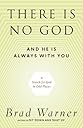
There Is No God and He Is Always with You: A Search for God in Odd Places
Product ID: 10965795
Buy anything from 5,000+ international stores. One checkout price. No surprise fees. Join 2M+ shoppers on Desertcart.
Desertcart purchases this item on your behalf and handles shipping, customs, and support to KUWAIT.
There Is No God and He Is Always with You: A Search for God in Odd Places [Warner, Brad] on desertcart.com. *FREE* shipping on qualifying offers. There Is No God and He Is Always with You: A Search for God in Odd Places Review: Another provocative and interesting read from Brad Warner - I admit it: I'm a Brad Warner fan. I don't always understand what he's saying but I respect him and his point of view, even if it challenges mine. I have read all of his books on Buddhism. I appreciate his voice because it is authentic and I can relate. I appreciate hearing about his journey and his struggles with life and Buddhism. It is his books that have caused me to deepen my practice. The subject matter of this book is somewhat provocative. I think I get where he's coming from with the God thing, and maybe I don't yet. It's an open question. But one worth asking and "living" in. Brad asks good questions, presents reasoned arguments, and interesting stories. And it's a relatively easy read, not the sit down and burn your way through as you might an interesting mystery novel, but one that is focused and poignant. Stylistically Brad continues to (I hate this word) "mature": he's less bombastic but his wry (and very human) humor comes through and I appreciate that. From what I've read Brad might think the same: he says the same things albeit in a more refined way. I actually look forward to re-reading this book (and I got the actual book this time) as my practice continues to develop. Review: Interesting, but more of the same - Brad Warner has said that this is his most important book. And maybe he's right. But being a regular reader of his blog and his books, I found that he says very little that is new. Warner's thesis in this book is that Zen Buddhism and belief in God are not incompatible. Quite the contrary, he says, zazen (the practice of sitting meditation, the fundamental practice of Soto Zen, Brad Warner's tradition) leads you to experience God. But it's not the bearded guy up in heaven. It's another thing. The book is an exploration of what this "God" is and how it is related to other people's concept of God. In this latter respect, the book is quite interesting and original. The first, what "God" really is, is just the same things Warner has said about his Zen practice in his books and blog. And I guess you can't say that much about Zen practice without being repetitive, so that's okay. In short, this is a nice book. For people out there who haven't read anything by Warner, I'd reccommend it for sure. He has been practicing zazen for quite a long time now, and his insights into Buddhist practice are quite interesting. His controversial attitude is quite appealing to me - although in this book he has quitted his famous punk pose. For regular Warner readers, I'd say there is nothing much new to you in this book. However, as a regular reader, you'll probably be aware of Brad's not-so-great financial circumstances and may want to help him with this. I did.
| Best Sellers Rank | #438,087 in Books ( See Top 100 in Books ) #146 in Atheism (Books) #790 in New Age Mysticism (Books) #1,833 in Religious Leader Biographies |
| Customer Reviews | 4.5 4.5 out of 5 stars (271) |
| Dimensions | 5.5 x 0.5 x 8.25 inches |
| Edition | First Edition |
| ISBN-10 | 1608681831 |
| ISBN-13 | 978-1608681839 |
| Item Weight | 2.31 pounds |
| Language | English |
| Print length | 208 pages |
| Publication date | June 18, 2013 |
| Publisher | New World Library |
A**E
Another provocative and interesting read from Brad Warner
I admit it: I'm a Brad Warner fan. I don't always understand what he's saying but I respect him and his point of view, even if it challenges mine. I have read all of his books on Buddhism. I appreciate his voice because it is authentic and I can relate. I appreciate hearing about his journey and his struggles with life and Buddhism. It is his books that have caused me to deepen my practice. The subject matter of this book is somewhat provocative. I think I get where he's coming from with the God thing, and maybe I don't yet. It's an open question. But one worth asking and "living" in. Brad asks good questions, presents reasoned arguments, and interesting stories. And it's a relatively easy read, not the sit down and burn your way through as you might an interesting mystery novel, but one that is focused and poignant. Stylistically Brad continues to (I hate this word) "mature": he's less bombastic but his wry (and very human) humor comes through and I appreciate that. From what I've read Brad might think the same: he says the same things albeit in a more refined way. I actually look forward to re-reading this book (and I got the actual book this time) as my practice continues to develop.
P**N
Interesting, but more of the same
Brad Warner has said that this is his most important book. And maybe he's right. But being a regular reader of his blog and his books, I found that he says very little that is new. Warner's thesis in this book is that Zen Buddhism and belief in God are not incompatible. Quite the contrary, he says, zazen (the practice of sitting meditation, the fundamental practice of Soto Zen, Brad Warner's tradition) leads you to experience God. But it's not the bearded guy up in heaven. It's another thing. The book is an exploration of what this "God" is and how it is related to other people's concept of God. In this latter respect, the book is quite interesting and original. The first, what "God" really is, is just the same things Warner has said about his Zen practice in his books and blog. And I guess you can't say that much about Zen practice without being repetitive, so that's okay. In short, this is a nice book. For people out there who haven't read anything by Warner, I'd reccommend it for sure. He has been practicing zazen for quite a long time now, and his insights into Buddhist practice are quite interesting. His controversial attitude is quite appealing to me - although in this book he has quitted his famous punk pose. For regular Warner readers, I'd say there is nothing much new to you in this book. However, as a regular reader, you'll probably be aware of Brad's not-so-great financial circumstances and may want to help him with this. I did.
M**P
This book is a WIN!
This recent addition from the Warner Canon is not without merit. The book is well written and engaging. I have to hand it to Dharma teachers, they have a hard road in front of them due to the nature of spiritual traditions and lingo. The material in this book is well presented and with Warner's charismatic wit and charm makes it a page turner. Thanks to Warner's personal interludes regarding his practice, it servers a ready inspiration for practitioners who have questions and who want to get rid of questions about deeper spiritual concerns towards Zen practice and God. The direct, no non-sense, yet with dashes of humor throughout makes the book a breath of fresh air to some of the heavier Dharma works appearing in the market today. Give it a read and see how it goes.
S**N
Brad Warner Does It Again - This Time to God
I've read several of Brad Warner's books and have always appreciated his ability to present some of the deepest and most penetrating ways of seeing ourselves and the universe in an accessible, personal, "living and lived" way. He does that very well here. Although his take on Buddhism and Zen may be controversial to some, Brad's description of the experience of what he chooses to call God in the context of Buddhist practice carries more weight than a merely philosophical or theoretical approach. He presents his understanding of God gained through Zen meditation and what might be called a "mystical" (my word) experience of oneness with everything while crossing a stream in Tokyo. He also talks about various topics associated with religious belief in the context of that understanding. As noted above, this is a very personal way of relating understanding, but I think that's perhaps the best way when talking about God. Read the book - whether you end up agreeing with Brad or not, I think you'll find it a valuable experience.
B**D
A real nonfiction "page turner"!
To be clear, this review is from the perspective of someone who is learning the way and precepts of Buddhism, and is a review of the content of this book from that perspective. Buddhism is usually seen as a religion without a notion of God. Brad Warner makes a convincing argument that there is room in Buddhism for God, especially a perception of God that quite different from the major monotheistic religions. In addition to being very insightful, it is also very well written and a joy to read. An experienced Buddhist can learn much from this book as well as a help to those, like myself, who are trying to understand the essence of this tradition.
F**D
Brad Warner nous livre un ouvrage magnifique sur un sujet difficile, encore plus délicat dans le bouddhisme zen. Il écrit avec une grande sensibilité et nous offre des points de vue éclairants. Un incontournable !
R**S
Mr Warner masterfully melds the belief system of his youth and his current practices of Zen Buddhism so well, it was so much a "yes" moment for me. If I was asked what I think about God, religion, and the peacefulness of meditation, I would have to refer others to this work...it says it all. I love his writing style: it is more like having an unedited conversation than writing a literary masterpiece. So good! :o)
T**P
What is god? Where is God? Who is God? What happens when you die? What does a God say we have to do? What does God say we shouldn't do? Is our God better than their God? Or do we have it all wrong and their God is better than ours? These are all important questions in a world that is swinging wildly (not in the good sense) between the spiritual -as evidenced by the fundamentalists of different religions- and the material -as evidenced by the soulless consumerism that plugs up the hole in our lives. Brad Warner provides his answer. If you want to know what that answer is, buy his book and read it. The guy is trying to make a living here. I saw some reviews that just didn't get it: is he trying to graft God onto Buddhism? No. Buddhism has a God. Buddhism is a God. Don't know what I mean? Read the book! The writing style is disjointed, say some. I didn't get that impression. Each chapter links to the following chapter. It's an exploration of God and so a handily arced narrative might be asking too much. I have yet to come across any major God works that followed an easy beginning-middle-end structure. Anyway, how Brad organised his book suited me just fine and I got it read within a week. There's a lot in there and this is the sort of book that you will finish reading and then put back on your bookshelf for future ponderings. I'd recommend it to anyone who wanted to understand the truthful answers to the questions this review posed at the beginning. Read with an uncritical mind and a willingness to believe and you will come out of the experience at the end with a better understanding of what God really means.
H**1
Classic Warner, and yet I'm glad to see him maturing, and moving on from his punk material. It's a good thing, his work seems to be adapting and evolving - just like spiritual practice should!
S**D
Brad Warner is dealing in ambiguity here, so if you're looking for clear conclusions you might be disappointed. But if you are comfortable with uncertainty and ambiguity (if you sit each day staring at a wall or floor for sufficient time, you can become comfortable with uncertainty and ambiguity), you might enjoy this entertaining and sometimes thought-provoking visit with Brad's thoughts. The book rambles a bit, but that's part of its charm. He is addressing some topics that are generally the purview of high-end philosophers but his tone and language are more in the "regular dude" realm. This might turn off some people (e.g. high-end philosophers?), but I think he's occupying a useful niche. Aside from all that, the book is worth reading just for his personal anecdotes; the guy has lead and is leading an interesting life.
Trustpilot
1 month ago
3 days ago