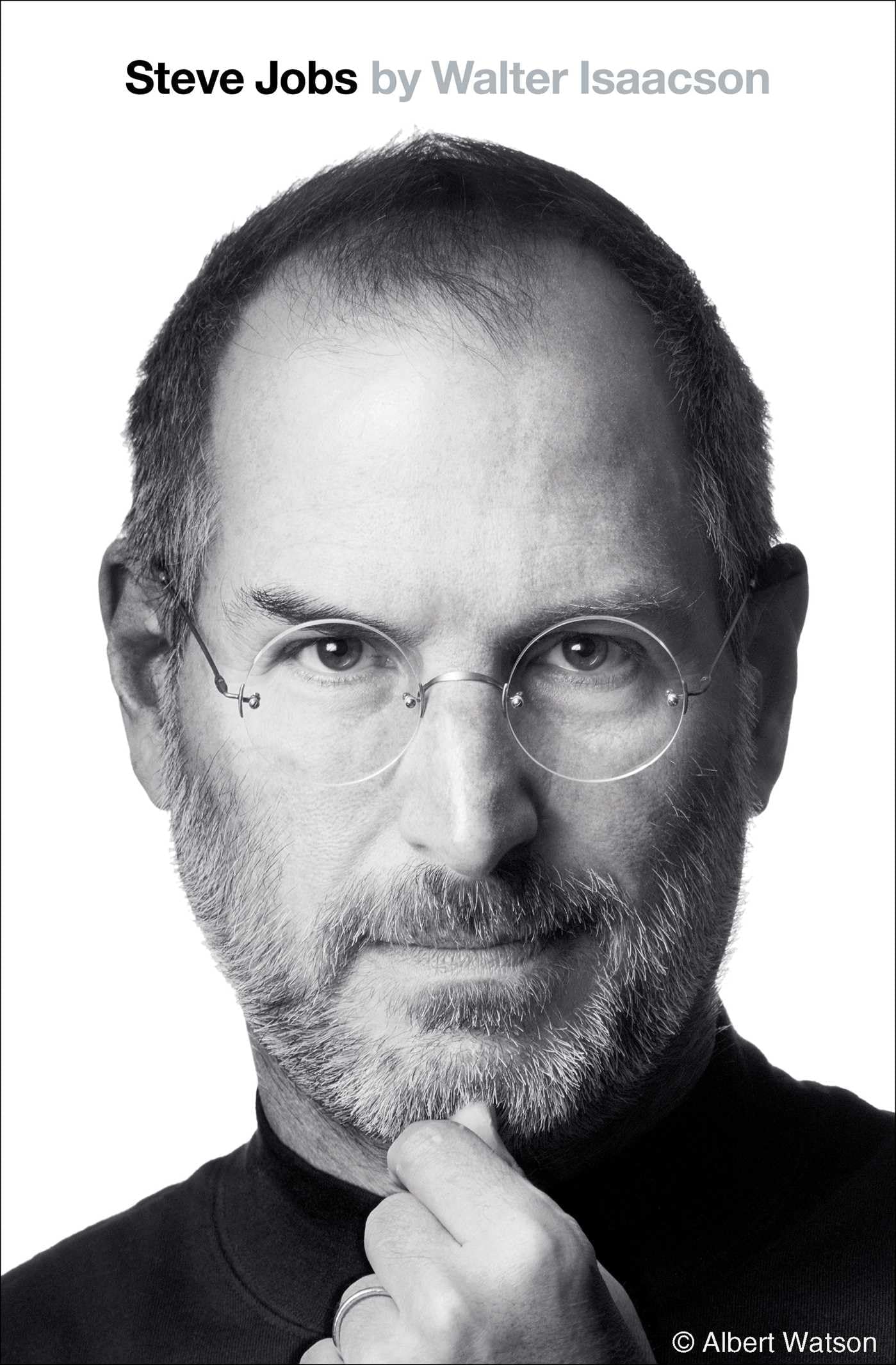


desertcart.com: Steve Jobs: 9781451648539: Isaacson, Walter: Books Review: Superb! I bet it will become a mandatory reading for MBA students - Another excellent biography by Isaacson. Very well written, a real page-turner that completely captured my attention for almost two weeks, until I finished with a sensation of wanting for more. Not only it is a very well researched biography, but Mr. Isaacson had access to Mr. Jobs and his close circle of family and friends, his foes, and most importantly, without any Steve Jobs interference or previous censorship in content. As the typical biography, the story is told chronologically, but alone the way you will learn much more than about Mr. Jobs personality, genius, his successes (Apple and Pixar) and failures (Next). The story also tells the evolution of the computer industry from the inception of the PCs with the Apple II, through the Mac, to the revolution brought by the iPod, iPhone and the iPad, and the lessons for corporate America. The book presents quite a paradoxical business case, in which great successes were based on fostering creativity and innovation, plus Jobs almost neurotic micromanagement and endless search for perfection, but against the book, achieved in a hostile environment due to Steve Jobs' mercurial personality, his tantrums and his selfish and arrogant attitude toward his partners, employees and competitors. I would not be surprise if this book becomes a mandatory reading for MBA students. It is one of a kind example of the key role and importance of a solid organizational culture that nurtures creativity and innovation, and cares about the quality of its products and the customer. Also it is an example of how you should not treat your employees. For those readers that enjoy biographies, I recommend Isaacson's Einstein: His Life and Universe and Benjamin Franklin: An American Life . For those interested in the business side of this biography, I recommend the following books that also deal about successful firms that are more centered on the customer than short term profit Onward: How Starbucks Fought for Its Life without Losing Its Soul and One Click: Jeff Bezos and the Rise of desertcart.com . And for a remarkable example of what happens when short term profit and financial reward are put as the main priorities instead of the product and the customers, do not miss Bob Lutz' Car Guys vs. Bean Counters: The Battle for the Soul of American Business . For those readers more interested in the development of the information technology industry, the IBM story as told in Making the World Work Better: The Ideas That Shaped a Century and a Company is an excellent complementary reading. And those that simply enjoy biographies, I recommend Isaacson's biographies Einstein: His Life and Universe and Benjamin Franklin: An American Life . Review: A damned good read.... - First and foremost, this is just a good read. I found that Isaacson's bio of Einstein was both interesting and did a profoundly better job of explaining relativity than my physics professors ever did. This book didn't disappoint. It was both captivating, and offered meaningful insight into Steve Jobs and the history of Apple. On way of my own biases, I was an Apple bigot before being an Apple bigot was cool. I learned to program on an Apple II that my father brought home in 1980. I've been a shareholder since I was given a single share of Apple stock for my bar mitzvah in 1981. I later grew up using Macs in college for everything from writing papers to digital circuit simulation to writing shareware apps that paid off debt I had accumulated as a starving grad student and provided the down payment on my first home. I even continued to use a Mac (eventually a PowerPC clone) as my exclusive home computer during most of my tenure with IBM! But around 1998-99, I finally gave up on Macs and bought my first PC. By then I had concluded that Windows hadn't simply caught up, but in many regards had surpassed the Mac. Mac had become a lesser computer that cost a premium, for which applications were fewer in number, and cost more. Even after Apple finally made substantial improvements and moved to a Unix kernel, I've never been tempted to look back. What's more, as Apple entered the consumer electronics domain and began producing closed devices and systems characterized by excessive proprietary control, I developed a decidedly anti-Apple viewpoint. Not a reflexive anti-Apple bias -- I did eventually start using a hand-me-down iPod when my daughter just had to upgrade to a iTouch. And we eventually all got iPhones after I concluded that, whatever it's limitations, it was still a better option than the available Android alternatives. But you get the point -- I'm now closer to being an anti-Apple bigot than one of the hordes of Apple fans. This book provides real insight into why Apple systems are as closed as they are, and why Apple acts as controlling as it does. It provides a good understanding of just how Steve Jobs drove Apple to where it is today. Ultimately, the book does not paint a flattering picture of Jobs. I've read other reviewers who complained that Isaacson clearly disliked Jobs, and that the book was a hatchet job. I've seen Isaacson doing interviews since Jobs' death, however, and if anything, I'd say the opposite is true. I think he actually holds Jobs in awe. (Those who find the description of Jobs as such an unrelenting jerk incompatible with the extremely strong positive feelings expressed by many who worked with him have clearly never worked with somebody of his ilk, and fail to recognize something basic in human psychology. When people go through what is effectively prolonged hazing, one of two things happen: either they part ways prior to completion, in which cases they are left only with enormous resentment over the hazing/bad behavior, or they survive the hazing and feel empowered and strongly bound to the others involved, as a result. What you would expect from those who worked closely with/for Jobs is precisely a polarized love or hate reaction. But even those who come out with strong positive feelings will still very much recognize, and likely even resent, the bad behavior.) I've also seen complaints that the book gives short shrift to specific events or aspects of Jobs' life. That strikes me as inevitable. The book is ~600 pages as it is. I think the purpose of the book is to provide meaningful insight into Jobs, including what formed him and what he formed, not to comprehensively document each and every aspect and occurrence of his life. Are there places where the book is lacking? Yes, I think so. The book suggests that there was a substantial change in Jobs -- a maturation -- between his initial stint with Apple and his second run there. But if he became more reasonable and effective at his interpersonal interactions with Apple employees in his second stint, that certainly wasn't apparent to me from the book. In any case, whatever its limitations, and whatever your feelings toward Apple or Steve Jobs, this book is enlightening and entertaining, and well worth the read. P.S. For the record, this is the first book I've read in it's entirety on an eReader. (A Kindle Fire -- perhaps there's some irony there.)


| Best Sellers Rank | #20,434 in Books ( See Top 100 in Books ) #6 in Biographies of Business & Industrial Professionals #23 in Computers & Technology Industry #190 in Leadership & Motivation |
| Customer Reviews | 4.7 4.7 out of 5 stars (26,315) |
| Dimensions | 6.13 x 2.2 x 9.25 inches |
| Edition | 1st |
| ISBN-10 | 1451648537 |
| ISBN-13 | 978-1451648539 |
| Item Weight | 2.2 pounds |
| Language | English |
| Print length | 656 pages |
| Publication date | October 24, 2011 |
| Publisher | Simon & Schuster |
E**2
Superb! I bet it will become a mandatory reading for MBA students
Another excellent biography by Isaacson. Very well written, a real page-turner that completely captured my attention for almost two weeks, until I finished with a sensation of wanting for more. Not only it is a very well researched biography, but Mr. Isaacson had access to Mr. Jobs and his close circle of family and friends, his foes, and most importantly, without any Steve Jobs interference or previous censorship in content. As the typical biography, the story is told chronologically, but alone the way you will learn much more than about Mr. Jobs personality, genius, his successes (Apple and Pixar) and failures (Next). The story also tells the evolution of the computer industry from the inception of the PCs with the Apple II, through the Mac, to the revolution brought by the iPod, iPhone and the iPad, and the lessons for corporate America. The book presents quite a paradoxical business case, in which great successes were based on fostering creativity and innovation, plus Jobs almost neurotic micromanagement and endless search for perfection, but against the book, achieved in a hostile environment due to Steve Jobs' mercurial personality, his tantrums and his selfish and arrogant attitude toward his partners, employees and competitors. I would not be surprise if this book becomes a mandatory reading for MBA students. It is one of a kind example of the key role and importance of a solid organizational culture that nurtures creativity and innovation, and cares about the quality of its products and the customer. Also it is an example of how you should not treat your employees. For those readers that enjoy biographies, I recommend Isaacson's Einstein: His Life and Universe and Benjamin Franklin: An American Life . For those interested in the business side of this biography, I recommend the following books that also deal about successful firms that are more centered on the customer than short term profit Onward: How Starbucks Fought for Its Life without Losing Its Soul and One Click: Jeff Bezos and the Rise of Amazon.com . And for a remarkable example of what happens when short term profit and financial reward are put as the main priorities instead of the product and the customers, do not miss Bob Lutz' Car Guys vs. Bean Counters: The Battle for the Soul of American Business . For those readers more interested in the development of the information technology industry, the IBM story as told in Making the World Work Better: The Ideas That Shaped a Century and a Company is an excellent complementary reading. And those that simply enjoy biographies, I recommend Isaacson's biographies Einstein: His Life and Universe and Benjamin Franklin: An American Life .
J**D
A damned good read....
First and foremost, this is just a good read. I found that Isaacson's bio of Einstein was both interesting and did a profoundly better job of explaining relativity than my physics professors ever did. This book didn't disappoint. It was both captivating, and offered meaningful insight into Steve Jobs and the history of Apple. On way of my own biases, I was an Apple bigot before being an Apple bigot was cool. I learned to program on an Apple II that my father brought home in 1980. I've been a shareholder since I was given a single share of Apple stock for my bar mitzvah in 1981. I later grew up using Macs in college for everything from writing papers to digital circuit simulation to writing shareware apps that paid off debt I had accumulated as a starving grad student and provided the down payment on my first home. I even continued to use a Mac (eventually a PowerPC clone) as my exclusive home computer during most of my tenure with IBM! But around 1998-99, I finally gave up on Macs and bought my first PC. By then I had concluded that Windows hadn't simply caught up, but in many regards had surpassed the Mac. Mac had become a lesser computer that cost a premium, for which applications were fewer in number, and cost more. Even after Apple finally made substantial improvements and moved to a Unix kernel, I've never been tempted to look back. What's more, as Apple entered the consumer electronics domain and began producing closed devices and systems characterized by excessive proprietary control, I developed a decidedly anti-Apple viewpoint. Not a reflexive anti-Apple bias -- I did eventually start using a hand-me-down iPod when my daughter just had to upgrade to a iTouch. And we eventually all got iPhones after I concluded that, whatever it's limitations, it was still a better option than the available Android alternatives. But you get the point -- I'm now closer to being an anti-Apple bigot than one of the hordes of Apple fans. This book provides real insight into why Apple systems are as closed as they are, and why Apple acts as controlling as it does. It provides a good understanding of just how Steve Jobs drove Apple to where it is today. Ultimately, the book does not paint a flattering picture of Jobs. I've read other reviewers who complained that Isaacson clearly disliked Jobs, and that the book was a hatchet job. I've seen Isaacson doing interviews since Jobs' death, however, and if anything, I'd say the opposite is true. I think he actually holds Jobs in awe. (Those who find the description of Jobs as such an unrelenting jerk incompatible with the extremely strong positive feelings expressed by many who worked with him have clearly never worked with somebody of his ilk, and fail to recognize something basic in human psychology. When people go through what is effectively prolonged hazing, one of two things happen: either they part ways prior to completion, in which cases they are left only with enormous resentment over the hazing/bad behavior, or they survive the hazing and feel empowered and strongly bound to the others involved, as a result. What you would expect from those who worked closely with/for Jobs is precisely a polarized love or hate reaction. But even those who come out with strong positive feelings will still very much recognize, and likely even resent, the bad behavior.) I've also seen complaints that the book gives short shrift to specific events or aspects of Jobs' life. That strikes me as inevitable. The book is ~600 pages as it is. I think the purpose of the book is to provide meaningful insight into Jobs, including what formed him and what he formed, not to comprehensively document each and every aspect and occurrence of his life. Are there places where the book is lacking? Yes, I think so. The book suggests that there was a substantial change in Jobs -- a maturation -- between his initial stint with Apple and his second run there. But if he became more reasonable and effective at his interpersonal interactions with Apple employees in his second stint, that certainly wasn't apparent to me from the book. In any case, whatever its limitations, and whatever your feelings toward Apple or Steve Jobs, this book is enlightening and entertaining, and well worth the read. P.S. For the record, this is the first book I've read in it's entirety on an eReader. (A Kindle Fire -- perhaps there's some irony there.)
E**A
Es uno de mis libros favoritos. Además la versión en inglés es mucho más barata y es nueva. Las versiones en español nuevas son muy difíciles de conseguir.
A**X
Ho appena terminato di leggere "Steve Jobs: The Exclusive Biography" e sono ancora completamente immerso nel mondo affascinante di uno dei più grandi innovatori del nostro tempo. Questo libro, scritto con maestria da un autore esperto come Walter Isaacson, offre un'analisi approfondita della vita e delle opere di Steve Jobs, il co-fondatore di Apple. La biografia è un'autentica pietra miliare che riesce a cogliere l'essenza di Jobs come persona e come leader carismatico. Isaacson ci conduce attraverso un viaggio emozionante, partendo dall'infanzia di Steve Jobs fino ai suoi trionfi e fallimenti nel mondo degli affari. L'autore non si limita a raccontare una sequenza di eventi, ma ci fornisce una comprensione intima di chi era realmente Steve Jobs e di cosa lo ha spinto a diventare l'uomo che ha cambiato il modo in cui viviamo e lavoriamo. Uno degli aspetti più notevoli del libro è la sincerità con cui vengono descritte le sfaccettature complesse della personalità di Jobs. Isaacson non esita a mostrare i lati negativi del suo carattere, evidenziando la sua determinazione quasi ossessiva e il suo carattere spigoloso. Questo rende la narrazione ancor più coinvolgente, poiché ci permette di apprezzare appieno le sue realizzazioni straordinarie, ma anche di riflettere sulle conseguenze che il suo approccio può avere sulle relazioni personali e professionali. La ricerca di Isaacson è encomiabile e la sua abilità nel raccogliere testimonianze e interviste di persone vicine a Steve Jobs aggiunge una dimensione autentica alla narrazione. Sono rimasto affascinato dai retroscena di Apple e dalle interazioni tra Jobs e altre figure chiave come Steve Wozniak e Tim Cook. La biografia offre una panoramica completa degli alti e bassi dell'azienda, comprese le decisioni coraggiose e i momenti di scontro che hanno plasmato l'industria tecnologica. Inoltre, il libro affronta tematiche più ampie come l'importanza del design, l'innovazione e l'arte nella creazione di prodotti che cambiano il mondo. È stimolante leggere di come Jobs abbia integrato la sua passione per l'estetica nella filosofia di Apple, creando prodotti che hanno ridefinito gli standard dell'industria e hanno influenzato il modo in cui viviamo e ci connettiamo.
M**M
I really enjoyed reading this book. It gave me an appreciation of the character, achievements and relentless drive for perfection and the remarkable that was Steve Jobs.
J**I
Last Christmas I had asked Santa for a Samsung smart phone. Apart from an ipod, I don't own any other Apple products and felt the brand is trying to make you buy all of their devices. Would I have wanted an iphone after reading the book? I had ordered the English version of the book on Amazon, something I strongly recommend. The computer related terms are English words anyway and the author's style is straightforward and without the use of complicated sentences. It took me a couple of weeks to read through the 600 pages of the book. It is like reading a drama: somehow I was waiting to read about all the products we are so familiar with now: the ipod, iphone and ipad. Once the book reached these chapters, I slowed down a bit, as if a climax had been reached. The book is amazing, probably the best biography I have ever read. The is partly due to the author and his style of writing, but mainly the life and personality of Steve Jobs is what makes that book stand out for me. I did not know much about Jobs before and was not too keen to find out about him either, but now I have started reading newspaper articles and watched old clips on Youtube about him and the Apple brand. The story is simply fascinating. It all starts out in his garage and ends up in one of the biggest brands of our time. Jobs could achieve this by being the person he was. The last biography I read was about Picasso and it is amazing how similar they might have been. Genius on one side, cruel, manipulative and mean on the other side. Jobs had asked Isaacson to write this book in 2004, probably aware that someone will write about him if he dies of cancer and by choosing Isaacson (former chairman and CEO of CNN, author of biographies of Einstein, Kissinger and Franklin) he made sure to have one of the best writing about him. This is the way he choose people he wanted to work with at Apple as well, he just calls up the person who he thinks is best for a certain job. Jobs did not want any control over the book, fully aware that Isaacson will also write about how mean he could treat even his closest fiends. Over two years Isaacson collected the material, doing many interviews with Jobs and people close to him. The book covers his childhood, private life and his career. What made a big impression on me: Jobs attention (you could call it obsession) to detail in everything (food, clothes, architecture, design, presentations, advertising) The way Jobs built his team (choosing the best, firing who is not good enough any more) What surprised me: Jobs deep love for Bob Dylan What I missed: I would have wished for more background information about what happened elsewhere at the time of the early computing since there was not only Apple. This is probably a lot to ask, since one book would not have been enough. I googled some people and companies Jobs had dealt with in order to find out more about them to complete the picture. To Isaacson's credit: all the big names seem to have a place in his book and a brief summary on what they were doing at the time (for example Bill Gates). Once I had finished the book there were no open questions, sometimes the author deals with a different person in a different chapter and you find out about it a little later in the book. After all I can say: I am very happy with my smaller phone and the open strategy works for me.
A**S
Il y a beaucoup de "storytelling" ce qui est merveilleux ... toutes ces petites histoires qui créent ce personnage très complexe et son «champ de distorsion". Je le recommande pour ceux qui aiment: des histoires d'affaires, l'esprit entrepreneurial, des gens créatifs, non-conformistes, les stratégies, les commerçants, vendeurs, etc ..... et bien sûr, toute autre personne qu'il est ouvert à une telle histoire et à la culture américaine (sachant qu'il y a beaucoup de scepticisme autour de la culture américaine en France ... oui oui, je sais que je généralise :)). Il s'agit d'un très long livre (568 pages) et croyez-moi, la lecture sur un Kindle ne facilite pas les choses. Mais il y a toutes les détails que vous pourriez avoir besoin : commençant par des témoignages et points de vue différents sur la même histoire jusqu'aux détails de la façon dont ils ont travaillé sur les couleurs et les composants utilisés pour chaque ordinateur. En outre, c'est un livre très inspirant ... bien sûr, si vous ne restez pas coincé dans la perspective «il est fou ou il est égoïste ou il ne se soucie pas de ceux qui travaillent pour lui ou que ça marcherait jamais en France ou qu'il est allé trop loin ". Bref...J'adore
Trustpilot
1 day ago
2 months ago