
DOWNLOAD THE APP


Customer Services
Copyright © 2025 Desertcart Holdings Limited
DOWNLOAD THE APP
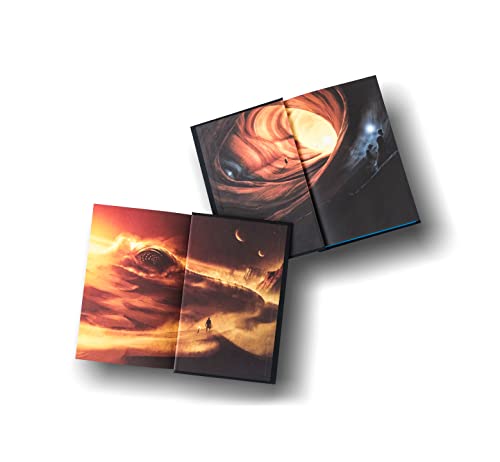
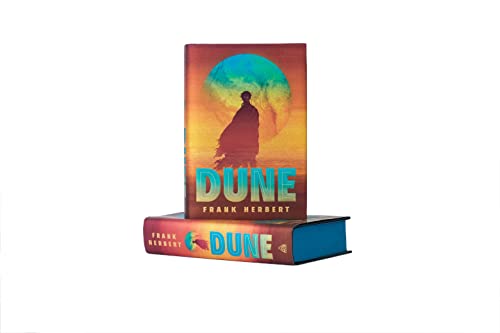
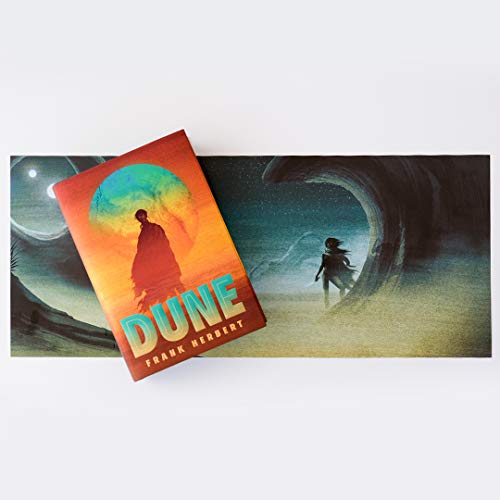
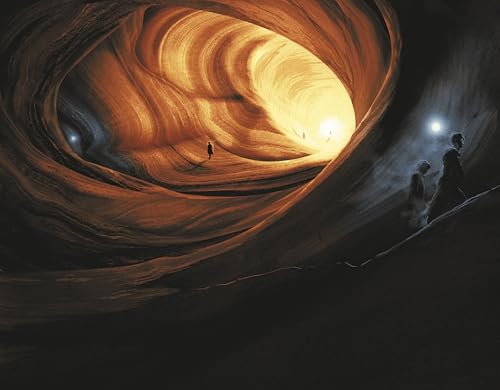
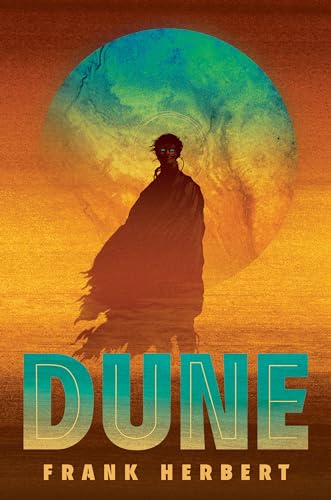
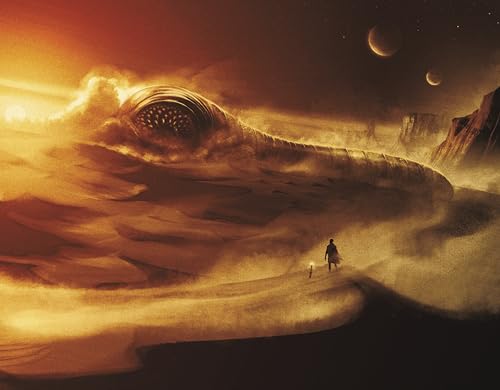


desertcart.com: Dune: Deluxe Edition: 9780593099322: Herbert, Frank: Books Review: A Sci-Fi masterpiece - Dune never ceases to amaze no matter how many times it is read or viewed. Its content is relevant for both when it was written and when it is viewed. It is one of the most extraordinary and exciting books I have ever had the privilege of reading. Review: A Fair and Balanced Review from an Unashamed Fan - Frank Herbert's Dune is simultaneously one of the most sublime and frustrating works of literature ever produced. I gave this novel a 5/5 rating outright for two reasons: it's my favorite novel, one I never tire of re-reading; and it's a book that should be read at least once by anyone interested in science fiction, fantasy, history, political science, economics, mysticism, or narrative. Regardless of whether or not someone actually enjoys Dune, every reader can glean something from it. That said, were it not for the latter two points, I would likely give this novel a lower rating, and here's why: Dune sacrifices storytelling for story. What in the name of Thor am I talking about? Let me explain. The world-building of Dune is outstanding, and I mean, REALLY outstanding. Tolkien can't hold a candle to Herbert's work in this regard - sure, he came up with a number of artificial languages, but from a narrative perspective that's actually one of the less productive things you can do to flesh out a setting. In Dune, every story element has relevance and connection to every other story element. The political reality of the galaxy depends on economic power, which is derived from trade, which is made possible by the Spacing Guild, who uses the spice, which exists only on Arrakis, whose administration depends upon the political climate. Paul's character is related to the mystical aspects of the story, but also brings relevance to the ecological and historical aspects. And so on, and so on. There isn't a loose thread here, no equivalent of the Fellowship of the Ring's Barrow-wights; nothing here could be removed from the whole package without substantially diminishing it. Tapping into all of these fundamental spheres of thought and creativity gives Dune the feeling of being a real history, and it gives the reader the feeling they're witnessing a change in the axis of civilization - something more subtly epic than big battles, of which we only get one (and an indirectly described one at that). That said, because Herbert is so dedicated to giving us as much material to work with as he can, in many instances this novel misses out on what might have been effective dramatic elements. An important plot point early on in the book is the supposed presence of a traitor in the midst of the Atreides, a traitor who will make the Harkonnen plot possible. Ordinarily I wouldn't mention this for spoiler concerns, but the novel basically comes out and tells you who the traitor is from the beginning, a while before it even comes into play in the events of the story. The reason this is problematic is because in a story which is so dependent upon political intrigue, it makes the decisions of the characters more powerful when we share in the mystery of the information around them. Another narrative problem is Paul himself. Though he is unquestionably the central character of the story as well as its protagonist, Paul starts off as a precocious fifteen-year-old and ends as a major player in galactic politics. In other words, he starts of as unrelatable and becomes less relatable as time goes by. In fact, several of my friends told me they stopped reading after a while because they didn't like Paul. This is an entirely fair criticism. In fact, the only character with whom a reader could form a true emotional connection would be Paul's mother, the Lady Jessica, whose problems are much more grounded in humanity. Now Paul's nature is basically vital to the fabric of the story, so it would diminish the story's complexity for him to become a more human character; but Dune would undoubtedly have been an easier reading experience had the novel chosen to focus on Jessica. This should give you a taste of what I mean. Dune isn't a novel that really engages a reader on an emotional level; because it reads so much like a history, it engages you on intellectual and thematic levels - but again, not emotionally. This is still my favorite novel, because measured against the standards of what it's trying to accomplish it succeeds beautifully; but potential readers should know what sort of undertaking they're facing when they pick this up.


| Best Sellers Rank | #23,766 in Books ( See Top 100 in Books ) #4 in Space Operas #13 in Classic Literature & Fiction #44 in Epic Fantasy (Books) |
| Book 1 of 6 | Dune |
| Customer Reviews | 4.7 4.7 out of 5 stars (101,921) |
| Dimensions | 6.26 x 1.95 x 9.46 inches |
| Edition | First Edition |
| ISBN-10 | 059309932X |
| ISBN-13 | 978-0593099322 |
| Item Weight | 1.96 pounds |
| Language | English |
| Print length | 688 pages |
| Publication date | October 1, 2019 |
| Publisher | Ace |
A**R
A Sci-Fi masterpiece
Dune never ceases to amaze no matter how many times it is read or viewed. Its content is relevant for both when it was written and when it is viewed. It is one of the most extraordinary and exciting books I have ever had the privilege of reading.
K**L
A Fair and Balanced Review from an Unashamed Fan
Frank Herbert's Dune is simultaneously one of the most sublime and frustrating works of literature ever produced. I gave this novel a 5/5 rating outright for two reasons: it's my favorite novel, one I never tire of re-reading; and it's a book that should be read at least once by anyone interested in science fiction, fantasy, history, political science, economics, mysticism, or narrative. Regardless of whether or not someone actually enjoys Dune, every reader can glean something from it. That said, were it not for the latter two points, I would likely give this novel a lower rating, and here's why: Dune sacrifices storytelling for story. What in the name of Thor am I talking about? Let me explain. The world-building of Dune is outstanding, and I mean, REALLY outstanding. Tolkien can't hold a candle to Herbert's work in this regard - sure, he came up with a number of artificial languages, but from a narrative perspective that's actually one of the less productive things you can do to flesh out a setting. In Dune, every story element has relevance and connection to every other story element. The political reality of the galaxy depends on economic power, which is derived from trade, which is made possible by the Spacing Guild, who uses the spice, which exists only on Arrakis, whose administration depends upon the political climate. Paul's character is related to the mystical aspects of the story, but also brings relevance to the ecological and historical aspects. And so on, and so on. There isn't a loose thread here, no equivalent of the Fellowship of the Ring's Barrow-wights; nothing here could be removed from the whole package without substantially diminishing it. Tapping into all of these fundamental spheres of thought and creativity gives Dune the feeling of being a real history, and it gives the reader the feeling they're witnessing a change in the axis of civilization - something more subtly epic than big battles, of which we only get one (and an indirectly described one at that). That said, because Herbert is so dedicated to giving us as much material to work with as he can, in many instances this novel misses out on what might have been effective dramatic elements. An important plot point early on in the book is the supposed presence of a traitor in the midst of the Atreides, a traitor who will make the Harkonnen plot possible. Ordinarily I wouldn't mention this for spoiler concerns, but the novel basically comes out and tells you who the traitor is from the beginning, a while before it even comes into play in the events of the story. The reason this is problematic is because in a story which is so dependent upon political intrigue, it makes the decisions of the characters more powerful when we share in the mystery of the information around them. Another narrative problem is Paul himself. Though he is unquestionably the central character of the story as well as its protagonist, Paul starts off as a precocious fifteen-year-old and ends as a major player in galactic politics. In other words, he starts of as unrelatable and becomes less relatable as time goes by. In fact, several of my friends told me they stopped reading after a while because they didn't like Paul. This is an entirely fair criticism. In fact, the only character with whom a reader could form a true emotional connection would be Paul's mother, the Lady Jessica, whose problems are much more grounded in humanity. Now Paul's nature is basically vital to the fabric of the story, so it would diminish the story's complexity for him to become a more human character; but Dune would undoubtedly have been an easier reading experience had the novel chosen to focus on Jessica. This should give you a taste of what I mean. Dune isn't a novel that really engages a reader on an emotional level; because it reads so much like a history, it engages you on intellectual and thematic levels - but again, not emotionally. This is still my favorite novel, because measured against the standards of what it's trying to accomplish it succeeds beautifully; but potential readers should know what sort of undertaking they're facing when they pick this up.
Y**N
The G.O.A.T
Dune is one of the greatest stories told. The depth in which Herbert wrote is phenomenal. This book and the series creates a vivid and extraordinary universe. I just wish he had completed the story line rather than his son and Anderson. Don't get me wrong his son and fellow writer are very entertaining with their extension of the dune universe but they do not have the depth that the father had.
A**R
‘Dune’ Paved the Way for Surfer Proverbs and ‘Star Wars’ Alike
A Bene Gesserit proverb: “When religion and politics travel in the same cart, the riders believe nothing can stand in their way.” I have to be honest, as a contemporary consumer of sci-fi film, small screen works and books, Frank Herbert’s 1965 Dune starts out slow. To be clear, I’m talking about the first half of some 800 pages. The reason why I stuck it out, though, is because I know the saga gets better as it continues (with Children of Dune being arguably the favorite). Known as one of the original sci-fi novels, I approached it like I would any classic piece of literature. And you know what? I’d put Dune in my personal cannon of classic lit because of it’s heavy influence on sci-fi … everything. That’s right, not even Star Wars would exist without Dune. Herbert, a (sometimes struggling) freelance writer with a passion for ecology and a streak of utopian futurism, wrote Dune when he was almost 40 years old. At the time, sci-fi readers generally liked their stories short but this paperback was almost 900 pages. Not surprising, Dune wasn’t an overnight success but it’s popularity grew in the 1970s and 1980s. Dune is set in a dry, distant future, where warring noble houses are kept in line by an interstellar empire. The noble duke Leto (heir apparent Paul Atreides’ father), head of the House Atreides, is forced to move his household from their perfectly good home planet to the desert planet of Arrakis (also known as Dune). The climate on Dune is practically inhabitable to the layman. Water is so scarce that whenever its inhabitants go outside, they must wear stillsuits, which capture body moisture and recycle it for drinking (it’s beyond nasty). In a nutshell, the whole thing is a classic you killed my father and I’m going to get revenge coming of age story. Everything else revolves around the hot commodity on Arrakis, which is basically a very powerful and desired drug: Spice (melange). This cinnamon-scented substance is made from excretions of killer 1,000-foot sand worms (yes, I had a lot of Tremors flashbacks reading this book), gas, then exposure to the sun — but to mine it is very dangerous because said worms don’t like noise. At all. The drug is crazy addictive but it’s also everywhere in small doses, so everyone that lives on or visits the planet has to stay, or else suffer fatal dopesickness. For empathic people, it helps explore the limits of personal identity and the mind’s relationship to the body. Daily use extends the lifespan by hundreds of years. Paul’s intellectual state (already Jedi-like due to his Bene Gesserit training) is heightened by the spice, causing some pretty spot-on nuggets of wisdom. Fear is a mind-killer. “Fear is the little death that brings total obliteration. I will face my fear I will permit it to pass over me and through me. And when it has gone past me I will turn to see fear’s path. Where the fear has gone there will be nothing. Only I will remain,” Paul reminds his mother at one point. While commentary on fear is serious and quite important to ponder, I’m reminded of the advice from the late Patrick Swayze’s character in Point Break: “Fear causes hesitation. And hesitation causes your greatest fear to come true.” By 1984 we had our very own Dune movie, directed by David Lynch (I’ve yet to see it but to be fair Lynch didn’t even like the cut that was released). Critics say an even better Dune movie came out later: Star Wars. Desert planets, evil emperors, a boy with a destiny, warring noble houses and a princess guarding spice — all things borrowed from Dune. There are mental Jedi powers like the Bene Gesserit, and even moisture farming like the Freman. Academics have written entire doctoral thesis on the topic. What’s next? Well, I’m waiting for the new Dune feature film to come out (prob not until late 2020), directed by Dennis Villeneuve. A feat that’s proven difficult today due to the original book’s heavy influence on so many well-established sci-fi classics like Star Wars. Consequently, it’s been rumored difficult to get the screenplay right. But in July 2019, Herbert’s son Brian (who co-wrote prequels to the Dune saga after his father’s death) said he’s seen and is pleased with draft four of the screenplay … in the meantime, I’m reading Dune Messiah. And drinking a tall glass of ice water.
T**N
👍
Y**K
A very good hardcase version of dune. Together with Dune: Messiah of the same publisher really good. Just fair warning there is no children of dune in this version
R**A
Frank Herbert's "Dune" is a fascinating, layered, and deep book. I read the book continuously until I reached the last page. Even though I knew that this book was the first of a series of six books (more, if you include the 'Dune' books his son wrote), from the ending, it was clear that the story was incomplete. The tale follows the fortunes of the young Paul Atreides's transformation from a young adolescent to a powerful man. Frank Herbert set the story in the distant future, where ruling houses control entire planets. The planetary fiefdoms are a far cry from the world we live in and will make a discerning reader wonder if we are heading in that direction. Kingdoms rise and fall, and when Paul's father is assassinated, he and his mother, the witch, Lady Jessica, find themselves lost on the desert planet, Arrakis, which is also the only source of mélange, or 'spice,' the valuable drug that enhances mental abilities and is the required for space travel. The book explores numerous themes – the rise and fall of empires, the coming of age, the exploitation and struggle for resources, love and politics, and the intersection of religion and politics – which demand careful consideration. Through the tale, he keeps you engrossed, but the book demands patient reading. He divided the story into three sections, each corresponding to a different phase in Paul's life. A few themes fascinated me. One is the value of water on a desert planet, where people regard even a teardrop as a precious source of water. The way they treat the dead before burying them should make us shiver and ask if this is our future. The second theme that intrigued me is the importance of mental power and magic. Even in the distant future, he envisioned, mental prowess is critical for survival. However, would he believe the same in these days of computer super-intelligence? Last, there is a strong connection between religion, mysticism, and political power. Love is always sacrificed at the altar of political power, even in the distant future Frank Herbert envisioned. The book is fascinating, and when you finish the story, you will want to read the next installment.
O**G
This is also a pretty decent book to read and fairly slim to put into a backpack
R**A
Hace ya años que leí Dune por primera vez, y me encantó. A partir de leer Ready Player One, estoy volviendo a leer mucha ciencia ficción, con lo que valía la pena revisitar Dune. Es un libro espectacular. Personajes bien trazados, un universo interesante, una trama potente, y un desarrollo perfectamente elaborado. Junto con Fundación, es mi libro favorito de ciencia ficción, y es por algo. Además, es una caso muy claro en el que la película (ni la mini-serie) llegan a dar una idea lo más mínimanete remota de la historia que te cuenta el libro, con lo que vale mucho la pena leerlo. En cuanto a la edición, totalmente correcta. Típico ebook, que se lee perfectamente en el kindle. Un poco caro, pero muy recomendable.
Trustpilot
2 days ago
4 days ago