🧩 Stick with the best—Fabri-Tac, where precision meets permanence!
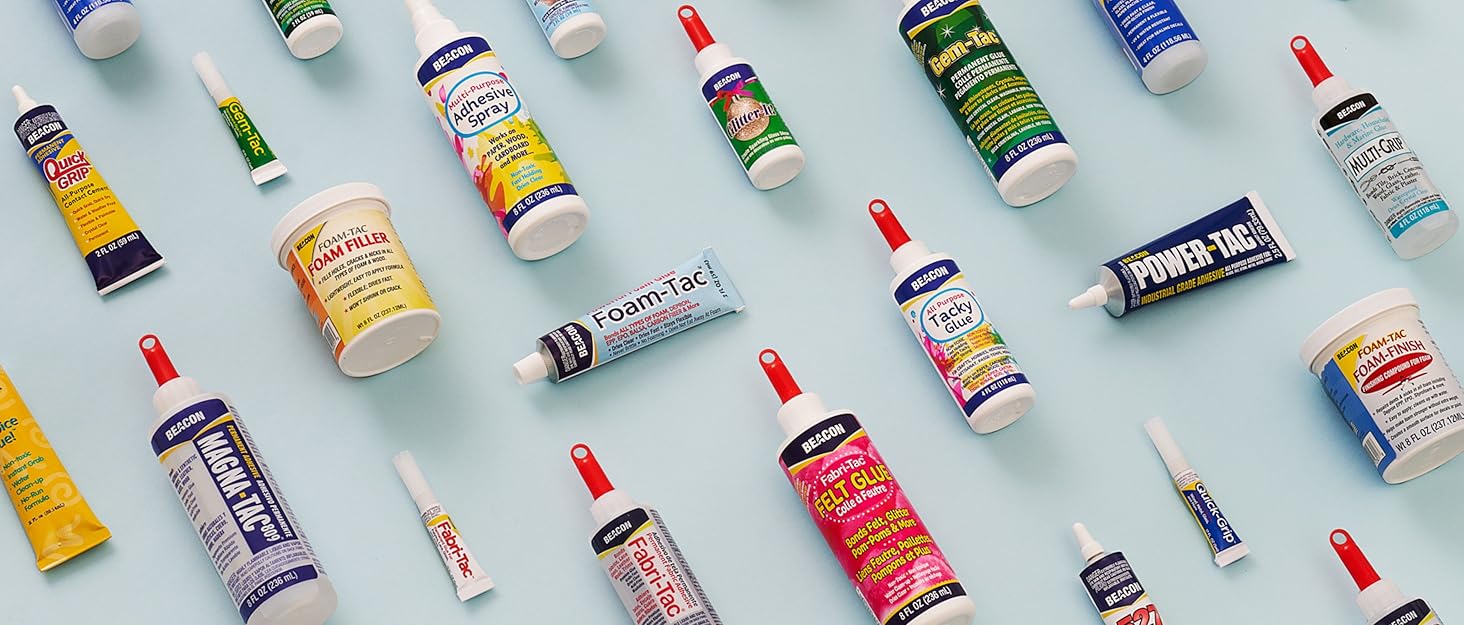
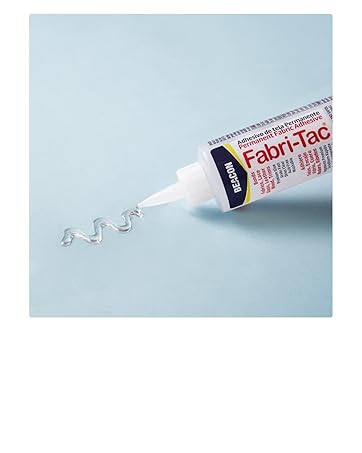
Fabri-Tac Precision Cap 4oz is a top-rated, versatile fabric adhesive delivering a strong, permanent bond with a fast-drying, clear finish. Ideal for professional-grade sewing, crafting, and repairs, its precision applicator ensures clean, accurate use on a wide range of materials including fabric, leather, and paper. Trusted by thousands with a 4.6-star rating, it’s the go-to glue for millennial makers who demand durability and style in every project.




| ASIN | B00178MNFO |
| Batteries required | No |
| Best Sellers Rank | #26,448 in Office Products ( See Top 100 in Office Products ) #42 in Fabric Adhesives |
| Customer Reviews | 4.6 4.6 out of 5 stars (6,389) |
| Date First Available | 6 August 2012 |
| Included components | Beacon Fabri-Tac Permanent Adhesive, 4-Ounce (FT4D),1123-34 |
| Item Weight | 4 Ounces |
| Item model number | 054947412983 or 3354 |
| Item volume | 118 Milliliters |
| Number of pieces | 1 |
| Product Dimensions | 16 x 5 x 4 cm; 113.4 g |
| Specific uses | Fabric |
J**F
De beste lijm voor hobby die er bestaat, lijmt zowat alles en laat geen sporen na op papier en textiel. Hij blijft ook nog soepel eens hij opgedroogd is wat ook belangrijk is voor het lijmen van textiel.
A**N
This is a very impressive glue, and I would have no difficulty in recommending it, thankyou.
L**.
This is the best "do it all" glue. It performs amazingly and I've been using it for over a decade to glue fabrics and whatnot. This is the good stuff, people!
M**A
Excelente producto.
S**Y
NO MORE SEWING Beacon Fabri-Tak does an excellent job of bonding fabrics, without soaking through. For guys, its a Godsend---no more stapling torn pants pockets or hemming pant-legs with duck-tape. I've used Fabri-Tak to hem pants, to apply patches to holes in work-clothes, to apply uniform patches, even to make up straps and belts with webbing and plastic buckles. For repair patches, it works better than iron-on patches. The only real major limit is seams which come under alot of stress, such as pants inseams (i.e., crotches) (including zippers), or children's play clothes. TACKING Another use is to make difficult sewing jobs easier. For example, you can "tack" material together for a rough fitting, adjust to a tighter fit, and then sew the seams. Or you can assemble a garment with Fabri-Tac, and then sew it easier (i.e., with simple stitches rather than multiple rows or complicated stitches). FOR COSTUMES Although no other reviewers mention it, Fabri-Tac is ideal for assembling costumes which will only be worn a few hours and probably never be washed. FOR UNIFORM OR DECORATIVE PATCHES 1) Mark the target area. I suggest using a soft pencil (or water soluble felt-tip marker) to mark underneath the edges of the patches (where the marks won't show) For round patches, mark the orientation, i.e., the exact top and/or exact bottom. Do NOT wash the garment immediately after applying patches. 2) Apply a light bead of glue 3/16 to 1/4" from the edge around the circumference, and then thin parallel lines about 3/8" apart across the interior which corresponding to embroidered parts of the patch. Some patches are virtually completely filled with embroidery, some aren't---do NOT apply Fabri-Tak to large (> 3/8" in diameter)unbroidered areas, or the patch may "pucker". 3) Align and press hard enough to spread out the glue. Place a heavy object (such as a brick or several thick books) on top of the patch (and underneath if you need to make a flat surface), and leave it for an hour. If you do this alot, then squares of thin plywood the size of the patches (on the top and bottom) and spring clamps will do the trick and allow you to apply several patches at a time. WARNING--patches applied this way may be impossible to remove after a week---if the patches are temporary, don't be so diligent, a light bead around the circumference is enough, or better yet, sew temporary patches on. TIP ON USE It REALLY dries fast. Maybe after a minute you can still tack things together temporarily, but you won't have a permanent bond. If you want a permanent bond, apply to a small section and quickly press the fabric pieces together, and hold for at least 5 seconds, before moving on to the next section. If you can, clamp the section behind you as you go--clothespins will usually do, but spring clamps with flat pivitong jaws are better-- Denali 14-Piece Spring Clamp Assortment . Press the fabric pretty hard--that gets the glue into the fibers. When you are done, go back and press the fabric together again. GENERAL PRINCIPALS OF GLUING ANYTHING WITH ANY GLUE 1) The strength of the bond is proportional to the area. That means, spread the glue uniformly over the whole surface. 2) Although counter-intuitive, the THINNER the layer of glue the stronger the bond. Especially with other types of glues, it often helps to use a spatula (such as an old plastic credit card) or popsicle stick to spread a then uniform layer of glue. With Fabri-Tac and some other glues/situations, you can apply a thin bead, and then squeeze it out into a thin uniform layer by pressing or clamping the peices together. Light clamping, or using weights for the same purpose, until the glue sets improves any gluing job. 3) Regardless of the instructions, all glues take days, even weeks, to reach full strength. So, it is best to set aside garments repaired with Fabri-Tac in a warm ventilated place for a couple of days before use---and NEVER wash garments immediately after repairing them. THIN ON THIN Applying thin fabric (such as ribbon, or a large area of thin felt), especially on thin fabric is a challenge. Mark the target (see above). Cut the ribbon to its final length. Then work fast. Apply the glue to the full length of the ribbon. Apply the ribbon to the target. Place a thick piece of paper over the ribbon and burnish. That means to rub hard. It is best to burnish in two or more stages, 1) quickly to get the whole ribbon burnished down, 2) repeat slower, and 3) repeat even slower. A small pastry roller is good for the first stage--but you can use your fingers or a spatula (don't forget the paper). For the last stage, an old thick credit card works well---push hard with the edge, bending the card, but keep it moving, in multiple short strokes(don't forget the paper). For items which will not be washed glue sticks will probably work better Avery Glue Stic, 0.26 oz, Pack of 6, (98095) . For the most difficult projects, use spray glue. PREVENTING LEAKING AND THICKENING My experience is that the bottle inevitably falls over on its side, and leaks. Tightening the cap doesn't seem to help. The same problem causes the glue to thicken over time. The simple solution to this to store the bottle in a tall glass bottle. A 6 1/2"; tall olive jar is perfect.
Trustpilot
2 weeks ago
2 weeks ago