
DOWNLOAD THE APP


Customer Services
Copyright © 2025 Desertcart Holdings Limited
DOWNLOAD THE APP


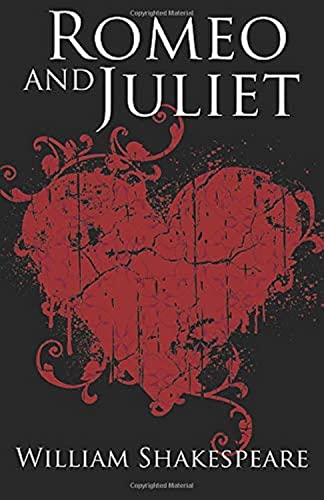

Romeo and Juliet [Shakespeare, William] on desertcart.com. *FREE* shipping on qualifying offers. Romeo and Juliet Review: Simply amazing. (desertcartClassics Edition) - Film, comic TV series adaptations multiply the story of Romeo and Juliet. I have enjoyed many of its mirrors as the version with Leonardo DiCaprio in Miami, the kung fu version with Jet Li, the black and white classic with Cantinflas ("London! I mean... Paris!"xD), or Juleo and Rumiet by Chespirito, among many others. But just now I dared to read the original and it was jaw-dropping... Shakespeare is invisible. He creates a world where he is not seen and all is doomed to fit or crash by its own accord. The first scenes indirectly set the following drama. In a world where Romeo and Juliet are not meant to be, they violently and inevitably fall in love with each other. There is Rosaline, whom Romeo loved with juvenile passion to her idealized shape. She is there and she is not there to make a contrast with the feelings toward Juliet. Juliet for her part has to clad her tears of love with the disguise of mourning for her cousin Tybalt; she utters words of revenge against Romeo because the world is against her love. Similar to the end of Don Quixote, when he awakes from madness to the tiredness of reality, Romeo also, at his end, has no romance but solitary longing; one that awakes him into a conscious lucidity of his "world-weary flesh" of man. The moment in which he is alone with himself after losing everything at hands of death... is not Hamlet that descends into madness, is Romeo that now seems to understand everything. Rather than romance Romeo and Juliet is about the struggle of small humanity against destiny, to do anything despite to have the whole universe plotting against you. As so this story is a triumph. Borges said that secretly the national book of Englishmen is the bible, not Shakespeare's works; and that Shakespeare's works was secretly the national book of Germany, not Goethe's works. I love so much the diverse authors of the United Kingdom, especially those at the end of 19th century and beginning of 20th century. But I have to concord that Shakespeare seems different. Clearly universal, not for the location of his plays, but because the human nature is common to each man and woman; a quality that Romanticism, in its insistence for exotic objects to clad the fellow citizens instead to get to to the heart of the exotic cultures, failed to accomplish (although in fairness perhaps that wasn't its goal). Maybe indeed Shakespeare is more akin to the Germanic and Nordic old sagas, those that have a wise understanding of men and women, with characters that deeply say far more in their actions or in subtle words. About the desertcartClassics Edition it has a minimal of X-Ray to indicate the allegiance of each character to the Capulet or Montague families. Beyond that there are not footnotes nor prologues; and I am happy for that because Shakespeare is better discovered without intermediaries. Review: Finally excellent help with Shakespeare's language - Till now, I had always found Shakespeare's language so daunting that after a while I gave up on reading him. Thanks to the Barnes&Noble editions, this has changed for me. First of all, they have an outstanding introductory essay where I read for the first time that Shakespeare's language is difficult for everybody and why. The realization that the problem was not just me gave me the courage to persevere. But for me the main advantage of these editions is that I get just the right amount of help with Shakespeare's language, without being overburdened with extra information that might be interesting but slows me down and makes me lose interest (e.g. the Arden Shakespeare editions). Especially helpful is that the explanations are split into two. Just beside the text are the translations of archaic words or "false friends", words we know but that were used with a different meaning in Shakespeare's time, such as "jealous". In other editions you are forced to search somewhere far away for these explanations and the editors wrongly assume that explaining such words once is enough (a seemingly minor issue which can become extremely frustrating). On the opposite page of Barnes&Noble Shakespeare more complicated expressions are explained, such as allusions to things we are no longer familiar with or cleverly crafted poetic phrases that probably would have caused Shakespeare's contemporaries difficulties too. Somehow, I found it much easier and faster to look for these explanations on the side rather than at the bottom. I was also agreeably surprised by the cheapness of these Barnes&Noble editions, I don't know how to manage to make money on them. My only disappointment is that they have not brought out the whole Shakespeare yet, I sincerely hope they will.
| Best Sellers Rank | #733,453 in Books ( See Top 100 in Books ) #97 in British & Irish Literature & Fiction #674 in Classic Literature & Fiction |
| Customer Reviews | 4.5 4.5 out of 5 stars (6,591) |
| Dimensions | 5.06 x 0.36 x 7.81 inches |
| Edition | Reprint |
| ISBN-10 | 145155205X |
| ISBN-13 | 978-1451552058 |
| Item Weight | 6.9 ounces |
| Language | English |
| Print length | 144 pages |
| Publication date | March 17, 2010 |
| Publisher | CreateSpace Independent Publishing Platform |
R**.
Simply amazing. (AmazonClassics Edition)
Film, comic TV series adaptations multiply the story of Romeo and Juliet. I have enjoyed many of its mirrors as the version with Leonardo DiCaprio in Miami, the kung fu version with Jet Li, the black and white classic with Cantinflas ("London! I mean... Paris!"xD), or Juleo and Rumiet by Chespirito, among many others. But just now I dared to read the original and it was jaw-dropping... Shakespeare is invisible. He creates a world where he is not seen and all is doomed to fit or crash by its own accord. The first scenes indirectly set the following drama. In a world where Romeo and Juliet are not meant to be, they violently and inevitably fall in love with each other. There is Rosaline, whom Romeo loved with juvenile passion to her idealized shape. She is there and she is not there to make a contrast with the feelings toward Juliet. Juliet for her part has to clad her tears of love with the disguise of mourning for her cousin Tybalt; she utters words of revenge against Romeo because the world is against her love. Similar to the end of Don Quixote, when he awakes from madness to the tiredness of reality, Romeo also, at his end, has no romance but solitary longing; one that awakes him into a conscious lucidity of his "world-weary flesh" of man. The moment in which he is alone with himself after losing everything at hands of death... is not Hamlet that descends into madness, is Romeo that now seems to understand everything. Rather than romance Romeo and Juliet is about the struggle of small humanity against destiny, to do anything despite to have the whole universe plotting against you. As so this story is a triumph. Borges said that secretly the national book of Englishmen is the bible, not Shakespeare's works; and that Shakespeare's works was secretly the national book of Germany, not Goethe's works. I love so much the diverse authors of the United Kingdom, especially those at the end of 19th century and beginning of 20th century. But I have to concord that Shakespeare seems different. Clearly universal, not for the location of his plays, but because the human nature is common to each man and woman; a quality that Romanticism, in its insistence for exotic objects to clad the fellow citizens instead to get to to the heart of the exotic cultures, failed to accomplish (although in fairness perhaps that wasn't its goal). Maybe indeed Shakespeare is more akin to the Germanic and Nordic old sagas, those that have a wise understanding of men and women, with characters that deeply say far more in their actions or in subtle words. About the AmazonClassics Edition it has a minimal of X-Ray to indicate the allegiance of each character to the Capulet or Montague families. Beyond that there are not footnotes nor prologues; and I am happy for that because Shakespeare is better discovered without intermediaries.
H**F
Finally excellent help with Shakespeare's language
Till now, I had always found Shakespeare's language so daunting that after a while I gave up on reading him. Thanks to the Barnes&Noble editions, this has changed for me. First of all, they have an outstanding introductory essay where I read for the first time that Shakespeare's language is difficult for everybody and why. The realization that the problem was not just me gave me the courage to persevere. But for me the main advantage of these editions is that I get just the right amount of help with Shakespeare's language, without being overburdened with extra information that might be interesting but slows me down and makes me lose interest (e.g. the Arden Shakespeare editions). Especially helpful is that the explanations are split into two. Just beside the text are the translations of archaic words or "false friends", words we know but that were used with a different meaning in Shakespeare's time, such as "jealous". In other editions you are forced to search somewhere far away for these explanations and the editors wrongly assume that explaining such words once is enough (a seemingly minor issue which can become extremely frustrating). On the opposite page of Barnes&Noble Shakespeare more complicated expressions are explained, such as allusions to things we are no longer familiar with or cleverly crafted poetic phrases that probably would have caused Shakespeare's contemporaries difficulties too. Somehow, I found it much easier and faster to look for these explanations on the side rather than at the bottom. I was also agreeably surprised by the cheapness of these Barnes&Noble editions, I don't know how to manage to make money on them. My only disappointment is that they have not brought out the whole Shakespeare yet, I sincerely hope they will.
V**A
understand this play with ease
Hello students, with a synopsis of the play and act by act details, definitions of the types of poetry used from 14 line sonnets, as well as how to read it properly, while simultaneously receiving the rhyme pattern the writer intended for the audiences ears to hear, makes the well known story of Romeo and Juliet truly, to maximum capacity, a enjoyable reading and comprehending endeavor. After every line there is a translation for our modern ears, after every few lines and translations there is key information that offers helpful tips on the scenes and what is going on, as well as tid-bits of history lessons and word relevance to help you fully understand and enjoy the play. There is no room to be lost in the original wording of the play with this book, Romeo and Juliet ( Shakespeare Made Clear) published by Garamond Press . The notes are descriptive enough to show the jokes and the jabs that are going on between the characters with translations of old words and or old sayings and comparisons to what they would relate to in today's time compared to the London wording of Shakespeare's time. A education through the centuries is included to gain a full understanding of the events, times and mind sets.
G**I
Wer kennt sie nicht, die Geschichte von Romeo und Julia? Vor über 500 Jahren schrieb William Shakespeare diese Liebesgeschichte die eigentlich eine Tragödie ist. Bis zum heutigen Tag ist die Geschichte brandaktuell, wurde unzählige Male verfilmt und ist bis heute eines der klassischen Stücke auf den Theaterbühnen weltweit. Dank des Projekts Gutenberg und Amazon Kindle sind viele Klassiker nun endlich einem viel breiteren Publikum zugänglich. Scheuten sich früher viele Leser, für so "alte Schinken" Geld auszugeben, so gibt es nun keine Ausreden mehr. Trotzdem sollten Klassiker wie dieser nicht in einer gut sortierten Familienbibliothek fehlen. Auch in der Schule (Gymnasium) wird Romeo and Juliet heute noch gerne als Klassenlektüre genommen. Die hier vorliegende Version ist eine gut lesbare, einfach verständliche Englische Version. Perfekt geeignet für ungeübte Leser, die den Klassiker trotzdem in Originalsprache geniessen wollen, oder für Schüler im Englischunterricht, die wohl sehr Mühe hätten den Schreibstil und die Wortwahl des Originals zu verstehen. Sowohl bei mir als auch bei meiner Mutter wurde Romeo and Juliet im Unterricht gelesen. Die Geschichte ist immer noch brandaktuell und sehr lehrreich. Was damals Familienfehden waren, sind heute Gang-Kriege. Hass und Verspottung heissen heute Mobbing und dass Familien gegen Beziehungen/Heirat/Zusammenleben sind, findet man auch heute noch in vielen Kulturkreisen der Erde. Als eines meiner Lieblingstheaterstücke gebe ich Romeo and Julia 5 Sterne. Absolut lesenswert! SPOILER: Die Geschichte spielt in der norditalienischen Stadt Verona. Die Familien Capulet und Montague sind Feinde und es kommt ständig zu Streit, blutigen Auseinandersetzungen und Kämpfen. Da ist es natürlich denkbar ungünstig, dass Julia Capulet und Romeo Montague sich ineinander verliebt haben! Sie müssen ihre Liebe geheim halten, da sie Angst haben, dass die verfeindeten Familien sich gegenseitig umbringen. In ihrer Verzweiflung lassen sich die beiden später von einem Pater namens Lorenzo trauen und hoffen, dass durch die heimliche Eheschliessung endlich das Kriegsbeil begraben wird. Leider geht ihr Plan nicht auf, zwischen Julias Cousin Tybalt und Romeo entbrennt ein heftiger Kampf und am Ende stirbt Tybalt. Der Tod Tybalts hat verheerende Konsequenzen: Wegen dem hohen Risiko, dass er von Julias Angehörigen verfolgt und ermordet wird, muss Romeo aus Verona fliehen. Auch seine eigene Familie kann ihn nicht schützen und so zieht er weiter nach Mantua. Sobald Romeo weg ist, wollen die Capulets ihre Tochter Julia gegen deren Willen mit Paris, einem Bekannten der Familie, verheiraten. Um ihrer Familie einen Strich durch die Rechnung zu machen und die Zwangsheirat zu verhindern, schmiedet Julia zusammen mit Pater Lorenzo einen Plan: Sie trinkt einen Schlaftrunk, der sie während 42 Stunden lähmt, bewusstlos macht und sie wie tot erscheinen lässt. Zur selben Zeit soll Romeo darüber in einem Brief berichtet werden, jedoch erhält er den Brief leider nicht wegen einem Missgeschick. Daraufhin berichtet ihm einer seiner Freunde fälschlicherweise von Julias Tod, unwissend dass diese lediglich durch den Schlaftrunk bewusstlos ist. Sofort lässt Romeo alles stehen und liegen, reist trotz der Gefahr, von den Capulets ermordet zu werden, nach Verona. Er will mit eigenen Augen sehen, wie Julia in der Gruft der Capulets beigesetzt wird. Als er sie mit eigenen Augen sieht und Julia für tot hält, schluckt Romeo Gift damit er an Julias Seite stirbt und dann wenigstens im Tod mit ihr zusammen sein kann. Kurze Zeit später sind die 42 Stunden um und Julia erwacht aus ihrem Schlaf. Entsetzt muss sie leider feststellen, dass ihr Plan nicht funktioniert hat. Der tote Romeo liegt neben ihr. Schockiert und aller Lebensfreude beraubt, greift Julia nach dem Dolch ihres Geliebten und nimmt sich ebenfalls das Leben. Als die beiden verfeindeten Familien Capulet und Montague begreifen, was für eine grosse Tragödie passiert ist weil sie Zeugen des Unglücks waren, begreifen sie endlich die Tragweite und die Konsequenzen ihrer so lange andauernden Familienfehde und des gegenseitigen Hasses. Sie beschliessen, sich zu versöhnen damit die Familien in Zukunft friedlich nebeneinander leben können und nie wieder so etwas schreckliches passiert.
A**R
Very good for teachers introducing Shakespeare at key stage 3. Very nice and simplistic starter which teachers can build upon before introducing early modern English. My advice would be to get the children to read this book first, complete comprehension exercise, introduce them to historical context and introduce them to the balcony scene in early modern English by highlighting key words through speaking and listening.
B**K
The dark inverse of Midsummer Night's Dream, in which everything goes wrong and the young lovers whose families oppose their union end up dead <--not a spoiler, it's all in the prologue. (In fact it might be a testament to Shakespeare's art that he can tell you the whole plot in the first 14 lines & you'll still read it.) It's great, of course, though in Shakespeare's early, lyric phase, so might be a bit sugary for some. Fun to spot the sonnets, matching quatrains etc. built into the verse if that's your jam, as they say. The edition I read was actually from the previous Arden series, edited by Brian Gibbons, not the one pictured.
A**T
Rien de grave à dire sur le livre de Shakespeare dans Roméo et Juliet. Merveilleux comme prévu et une belle couverture par-dessus. J'adore cette pièce et le livre est magnifique.
O**I
Sorunsuz hızlı kargo uygun fiyata ingilizce kitap okuma 👏👏
Trustpilot
1 month ago
2 days ago