
DOWNLOAD THE APP


Customer Services
Copyright © 2025 Desertcart Holdings Limited
DOWNLOAD THE APP
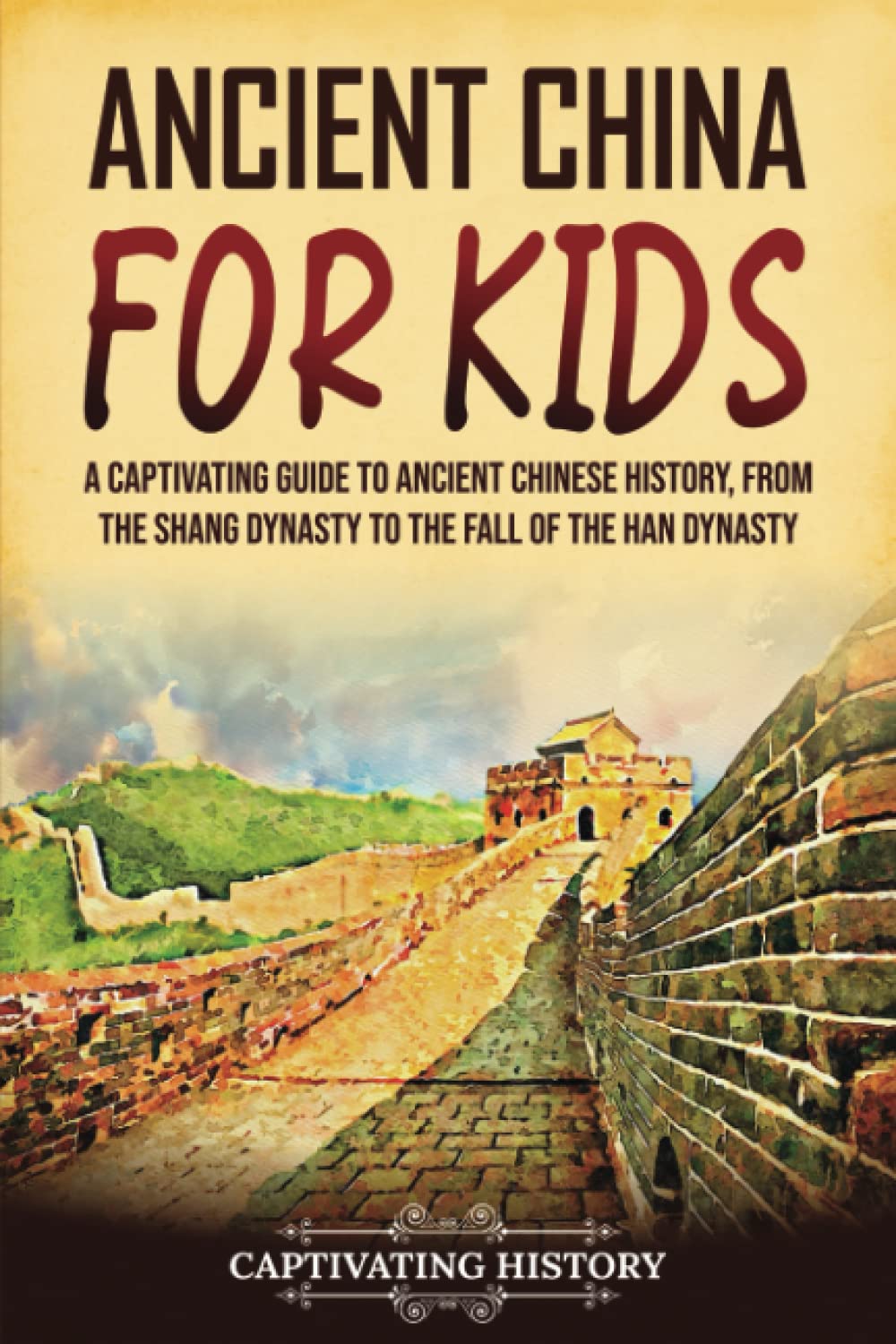
Ancient China for Kids: A Captivating Guide to Ancient Chinese History, from the Shang Dynasty to the Fall of the Han Dynasty (History for Children) [History, Captivating] on desertcart.com. *FREE* shipping on qualifying offers. Ancient China for Kids: A Captivating Guide to Ancient Chinese History, from the Shang Dynasty to the Fall of the Han Dynasty (History for Children) Review: Good! - I love these books as they are always informative, educational and interesting! Provides the right amount of facts/tidbits - not too little, not too much. Review: Excellent Book on Ancient China! - This is the best book I’ve ever come across that makes ancient Chinese history simple and clear enough for general reading. It has plenty of rich, yet easy to understand information about China’s antiquity from its beginning on the Yellow River and continues through the Xia to the Han Dynasty. It explains so many things that we hear about but never otherwise understand, like moon cakes and the order of animals in China’s famous zodiac calendar. Interesting tidbits, such as the ancient Chinese favoring bread and beer in the north in contrast to rice and tea in the south. Just as in Western culture, China has always struggled through dominance by either a united national existence versus an existence of independent regional states. In addition to household names like Confucius, Lao Tzu, and Sun Tzu, the author shows the importance of other great Chinese personalities, such as Yu the Great, Wu Wang, and Qin Shi Huang. Did you know that Guangwi tried to expand China to Vietnam and Korea? And the Chinese complained about high taxes, just like we do. The list of inventions from the ancient Chinese is beyond impressive – everything from paper to ice cream – and even the umbrella. They even invented hot air balloons to transmit military information. This is a great book for both kids and adults. Yes, it includes the famous things, like the Great Wall, silk, porcelain, and calligraphy, but it adds so much more, like standardizing weights and measures and wagon axles, and a written language common to all Chinese dialects. I would give it more than 5 stars if desertcart allowed me.


| Best Sellers Rank | #1,192,921 in Books ( See Top 100 in Books ) #288 in Chinese History (Books) #2,039 in Education Theory (Books) |
| Customer Reviews | 3.8 3.8 out of 5 stars (65) |
| Dimensions | 6 x 0.19 x 9 inches |
| ISBN-10 | 1637164971 |
| ISBN-13 | 978-1637164976 |
| Item Weight | 6.1 ounces |
| Language | English |
| Part of series | History for Children |
| Print length | 80 pages |
| Publication date | October 27, 2021 |
| Publisher | Captivating History |
B**R
Good!
I love these books as they are always informative, educational and interesting! Provides the right amount of facts/tidbits - not too little, not too much.
E**C
Excellent Book on Ancient China!
This is the best book I’ve ever come across that makes ancient Chinese history simple and clear enough for general reading. It has plenty of rich, yet easy to understand information about China’s antiquity from its beginning on the Yellow River and continues through the Xia to the Han Dynasty. It explains so many things that we hear about but never otherwise understand, like moon cakes and the order of animals in China’s famous zodiac calendar. Interesting tidbits, such as the ancient Chinese favoring bread and beer in the north in contrast to rice and tea in the south. Just as in Western culture, China has always struggled through dominance by either a united national existence versus an existence of independent regional states. In addition to household names like Confucius, Lao Tzu, and Sun Tzu, the author shows the importance of other great Chinese personalities, such as Yu the Great, Wu Wang, and Qin Shi Huang. Did you know that Guangwi tried to expand China to Vietnam and Korea? And the Chinese complained about high taxes, just like we do. The list of inventions from the ancient Chinese is beyond impressive – everything from paper to ice cream – and even the umbrella. They even invented hot air balloons to transmit military information. This is a great book for both kids and adults. Yes, it includes the famous things, like the Great Wall, silk, porcelain, and calligraphy, but it adds so much more, like standardizing weights and measures and wagon axles, and a written language common to all Chinese dialects. I would give it more than 5 stars if Amazon allowed me.
D**S
Interesting
This started of in an amusing way, asking the reader to imagine a time with Nintendo Switch and Pokemon, which got the point across of how life would be very different back then. The book explained about life in Ancient China and how men were required to join armies and fight for whoever was the rule of their province. For me one of the most fascinating aspects was when it went into detail on what is/was the largest tomb every constructed. The Emperor was buried with the Terracotta army with 8000 life size statues of soldiers, each of them different. They portrayed people of different ages and sizes, had different hairstyles and faces and were equipped with various but real weapons. As a result, no two statues were alike! There were also 150 life size cavalry horses, 130 chariots and 520 other horses, with other non military figures found in adjacent areas. It is thought that over 700,000 craftsmen worked on all this for many years. The author provides details of the Great Wall of China as well,making this a fascinating read that I think young people will enjoy
S**.
Good attempt to simplify China's history but needs considerable corrections.
To say no information for Xia Dynasty is wrong. There are lots of information about Xia dynasty. May be not as much as other dynasties. A little research should reveal lots of information in various historical documents, web sites etc. people may need to know Chinese to get to those details. It might be better to include some of the Chinese Characters when referring to names. Case in point: when referring to the older Shang dynasty. The emperor’s name in Chinese is translated as Tang. The Chinese Chraracter would carry the meaning of hot or soup and have a soothing connotation. This is very different as Tang in Tang dynasty which could carry the meaning of empty, hollow in mind or exaggerate in speech.. Huang Di, The Chinese charaxter is also the word for yellow. That's what lead to the reference as Yellow Emperor. Would be better to clarify. Would be better if a picture of the bronze currency is posted in the book. .Di Xin is better known as Shang Zhou, or Zhou Huang. This Zhou in Chinese character is different than the Zhou in Zhou dynasty. Would be better to include the Chinese character as people reading history would more likely see Shang Zhou. The Zhou dynasty separated the different classes of people as king or the royal family, nobles as dukes, earls etc., officials or educated, farmers, workers, traders. Traders are placed last because they were seen as non productive. They trade goods that are produced by others. Western Zhou was named as such because the capital was at Gao Jin or today’s Xian. King You lost the capital to northern raiders and moved the capital to luo today’s Luoyang, which is east of Xian. That is why it’s name Eastern Zhou. Qin,is also translated as Chin in a lot of western Chinese history books. In fact that is where China got the English name from. Qin Zhaoxiangwang defeated Zhou Haowang at 256 BC. Not sure where you get the name King Nan. Qin Zhuangxiangwang conquered Eastern Zhou in 249 BC. Qinshihuang thinks himself to be the most important emperor so he called himself shiHuang. Shi shoiuld not be confused as the translation for rock or stone by the Chinese character meaning begin. He consider himself the beginning of a dynasty lasting for more than ten thousand years. He moved all the surrendered kings to Xianyang to keep an eye on them. He also try to destroy any rebellion from the nobles of the conquered 6 states by burning their books and killing the educated by burying them alive. The brutal tactic is to instill fear so people would not dare to revolt. This high pressure rule eventually speed up the rebellion and ended the dynasty. The writing about his reason for burning books is inaccurate. Qinshihuang unified the Chinese writing but it was not simple. It was not the traditional writing either. The traditional writing of today is developed in later centuries and simplified version of today was adopted by the communist after 1949. The unified writing in Qin dynasty does standardize the country and make it much easier for trade and communication. The building of the irrigation canal was to improve the Qin State’s farms. Not the whole country. He unified and connected the Great Wall from walls of the 6 states to defend against the northern tribes from raiding farms south of the Great Wall. The terracotta soldiers were for his tomb and nothing to do for the people. So may be removed the reference to the terracotta soldiers in the same sentence with the Great Wall to make it clearer. You already have it later in the text about the terracotta soldiers guarding him in the afterlife. One major event was missed in the Han dynasty. The Hunts who were raiders in the early Han dynasty and were robbing farmers. They were driven west out of northern China to The steeps and created Attila in later years. Similar to Zhou dynasty, Western Han dynasty capital at ChangAn today’s Xian, Eastern Han dynasty capital at Luoyang. Through different Dynasties people have to serve the country. During the warring states, every male can be drafted to be a soldier. People farm during the farming season and do training at the off time. Han dynasty is the first dynasty that created the professional soldiers because they need to train better soldiers to fight the northern tribes who repeatedly raider the farmers. Qu yuan died to show his loyalty to the king ChuWeiwang. And that he would use his life as a way to advise the emperor not to sign a treaty with Qin state as that would weaken Chu defense. He committed suicide. Dragon boat festival is in memorial for him because he as am well loved good official and helped the people in Chu state. Moon cake have egg yolk bake inside the cake whereas Sun cake does not have egg yolk. Mid autumn have always been a time to celebrate the harvest. During the Yuan dynasty. The Chinese use the giving of cake as a way to pass on the message to revolt against the Mongols together. little slips of paper were buried inside the cake to pass on the message so the Mongols would not find them even with severe searches. This revolt eventually drives the Mongols out and established the Ming dynasty. The double 9 festival evolved from the story of Eastern Han time. Yunan county Wounjin’ parents died of the plague. He then tried to flee by leaving the city and go live in the country. And try to find a cure. On 9/9 of the lunar month his teacher told him to go kill the devil that brought the plague by giving him a bag of dogwood leaves and a bottle of chrysanthemum wine. That started the tradition. Not sure where you get the tradition that people hang sheep and chicken skin on New year festival. Never heard of it nor seen it in any history or mythology references. However there is a method of preserving meat after the autumn harvest by using a lot of oil and marinating and hanging them to dry after the poultry and pork are cooked. They tend to hang them out for a while to both let the sun dry the meat as well as let the winter trade wind that comes from the north west desert that is very dry to help dry them. The first lunar new year is always between January and February. Never near December.
G**N
Akin to a middle school research project
We purchased and returned this item within minutes of taking it out of the packaging. The quality of the book itself and the writing are both very poor. There are many URLs inline in the book as citations, making it both unpolished and hard to read. I’m pretty sure most of the images have been stolen. Amazon should remove this book from its store. Selection is good for customers, as long as it meets the minimum quality bar. This item does not.
A**R
This was presented really well - it's not too long and nor does it gloss too briefly over topics (the various dynasties, the corruption, wars etc.). It's a really good introduction to an ancient history that children otherwise wouldn't know much about (as we focus on western history in school). Well done CH, keep up the good work!
C**S
Unless your kid is a Rhodes scholar, don’t buy this. It hardly has any pictures and is ridiculously wordy, and for the money is more like a pamphlet than a book.
Trustpilot
4 days ago
1 month ago