We remain fully operational. Our teams are working around the clock to ensure your deliveries continue safely.

DOWNLOAD THE APP


Copyright © 2025 Desertcart Holdings Limited
DOWNLOAD THE APP
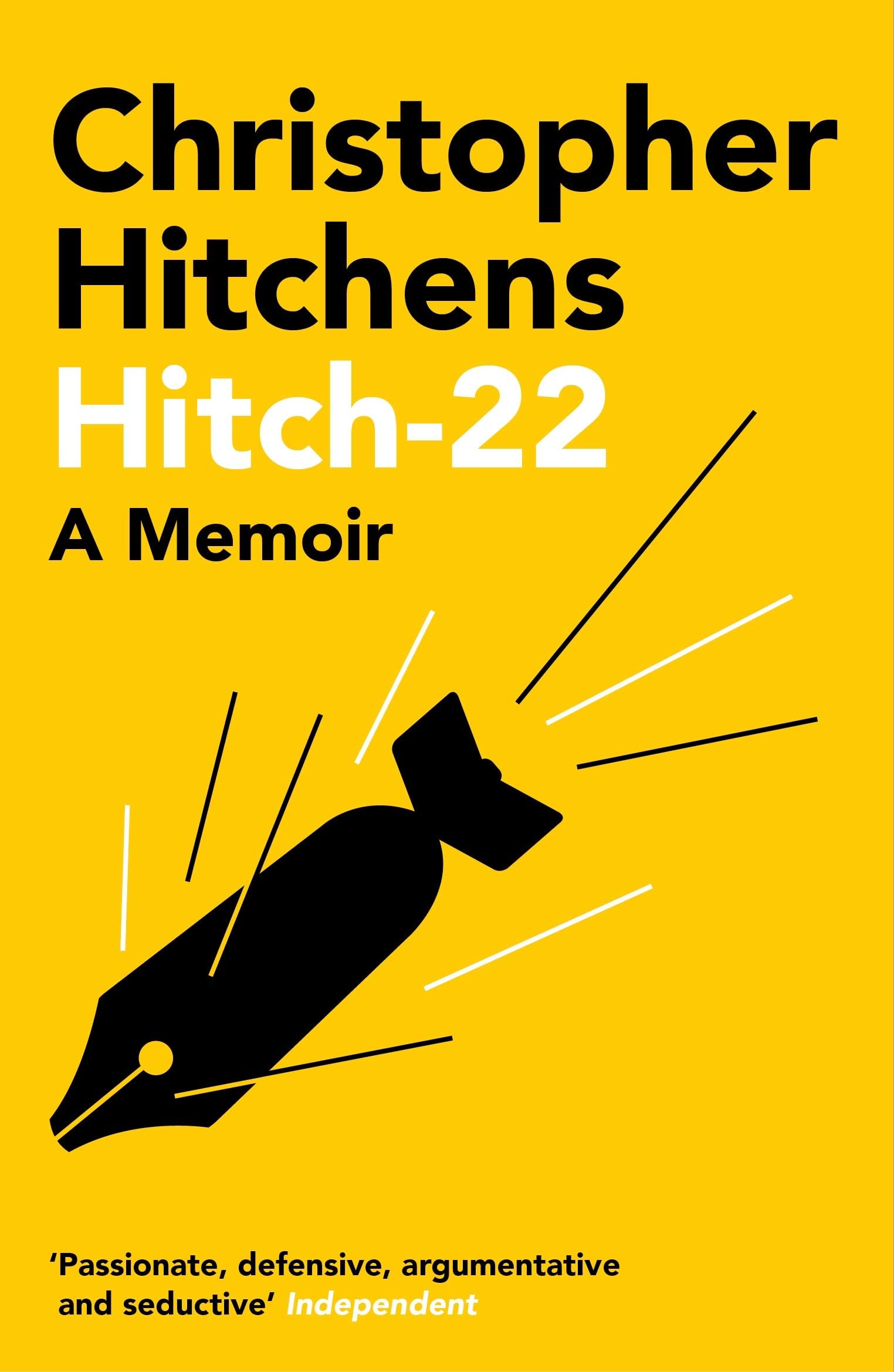
Buy Atlantic Books Hitch 22: A Memoir by Hitchens, Christopher online on desertcart.ae at best prices. ✓ Fast and free shipping ✓ free returns ✓ cash on delivery available on eligible purchase. Review: Christopher Hitchens, once the "enfant terrible" of the international hard left, has written a memorable memoir, HITCH-22, that is at once pretentious, bombastic, self indulgent, sometimes petulant -- and often brilliant. Much in Hitchens' book is laugh out loud funny as he takes one pot shot after another at his old political allies and enemies. And for someone with Hitchens' wit and writing facility, taking down his enemies with the written word is like shooting the proverbial fish in a barrel. On a more serious note, Hitchens explains how he transformed himself from a London-based Trotskyite commentator into an American immigrant who defends of the allied invasion of Iraq. In fact, Hitchens presents us with a quite sensible defense of George W. Bush's war on terror in both Iraq and Afghanistan. This is not an easy book to read, mainly because Hitchens writes in a style that makes clever use of inverted grammer and five and six syllable words as he reaches into his psyche to explain himself. Morever, his views are strongly held, and he doesn't suffer fools with any sympathy for their alleged pigheadedness. On the other hand, this book is a very good read for those who are trying to cope in a world that seems to be spiraling out of control. Hitchens opens his memoir with a short family history - which may explain a lot about his cynical view of the world. His father was a quite common British Navy officer, while his mother was an immigrant Jew with Polish/Germanic blood. His mother ultimately meets s a tragic fate, while his father lives out his routine life without a clue to the torment of his wife or the intellectual pretensions of his son. Hitchens was educated at Oxford, where he is exposed to the leftist tendencies of that venerable institution, and he became a self-proclaimed Trotskyite member of the communist party. In his early days, the Vietnam War was the focus of his activism, and he joined the anti-war movement that denigrated capitalistic America. But his intellectual curiosity was too restless for the static Marxist view of the world, and as he witnesses events in eastern Europe, the Middle East and elsewhere, he begins to develop empathy for the free enterprise system that empowers America. The turning point for Hitchens came on Sept. 11, 2001. The terrorist attacks on lower Manhattan and the Pentagon, costing some 3,000 lives (most of them American) was a revelation for Hitchens. "Before the close of that day, I had deliberately violated the rule that one ought not to let the sun set on one's anger, and had sworn a sort of oath to remain coldly furious until these hateful forces had been brought to a most strict and merciless account." So Hitchens began to write about the hatefulness of the Islamist jihadists, defending America against those who felt "the chickens had come home to roost." `I did not intend to be told, I said, that the people of the United States - who included all those toiling in the Pentagon as well as all those, citizens and non-citizens, who had been immolated in Manhattan - had in any sense deserved this or brought it upon themselves," Hitchens writes. "I also tried to give a name to the mirthless, medieval, death-obsessed barbarism that had so brazenly unmasked itself. It was, I said, 'Fascism with an Islamic Face'." When he decides to become an American, he studies diligently for the citizenship test and passes, of course, with flying colors (Hitchens is a serious student of American history as evidenced by his book, "Thomas Jefferson: Author of America"). By that time he had become an ardent supporter of the incursion into Iraq and he was sworn in at the Jefferson Memorial by Homeland Security Chief Michael Chertoff (talk about clout). His fondness for America, however, does not extend to American presidents and other national leaders: Lyndon Johnson ("hideous); Richard Nixon ("running a parallel regime of bagmen and wiretappers behind the façade of a legitimate government); Jimmy Carter ("..pious, born again creep); Ronald Reagan ("the carapace of geniality proved to be flaky...the look of senile, shifty malice); George H.W. Bush ("I simply detested the way in which he lied his way as Vice President through the Iran-contra scandal.."); Bill Clinton ("habitual and professional liar"); Curiously, George W. Bush escapes the Hitchen scorn. In an earlier volume ("The Trial of Henry Kissinger," published in 2001) Hitchens developed a full-scale criminal indictment of Henry Kissinger (whom Hitchens describes as"indescribably loathsome" in his memoir) for his conduct of American foreign policy. In the final chapters of his book, Hitchens shifts the focus to himself. He comes across as a gadfly, of course, but also a wary, skeptical (sometimes cynical) observer of our times whose professional objectives include intense scrutiny of all that is evil in our world. In an effort to explain himself further, Hitchens fashions for himself a Proustian survey in which his answers are supposed to give us insight into his persona. What we get is a portrait of a conflicted intellectual who takes pride in his knowledge and experiences, but whose most "marked characteristic" is insecurity. He most dislikes stupidity, according to his self-imposed questionnaire, and he most admires both moral and physical courage. His favorite virtue is an appreciation for irony. It was with a sense of irony then, when Hitchens was approaching 50 years of age, that his younger brother, Peter, discovers that their mother was Jewish, raising the intriguing possibility that they both are Jewish. A self-proclaimed atheist (see his book, "god is Not Great: How Religion Poisons Everything"), Hitchens considers, but rejects the prospect of his Jewishness. In doing so, he reveals his contempt for Zionist Israel and its occupation of Palestinian lands. But his awareness of his Jewishness increases his sympathy for the suffering of the "children of Israel" as they seek a homeland. His confliction over his roots thus gives him valuable insights to the current Middle East stalemate between Israeli Zionists and Islam jihadists. Hitchens is clearly sympathetic to the Palestinian movement, but he also thinks that the Jewish people have a right to seek their own identity, preferably somewhere else than on Palestinian soil. Hitchens illuminates his agony over this dilemma by describing the deterioration of his relationship with his good friend Edward Said, a Palestinian intellectual. Hitchens and Said initially developed a very close relationship, but after Sept. 11, 2001, according to Hitchens, Said started writing anti-American essays and articles, and their relationship started to cool. The relationship was effectively destroyed when Said quoted, without attribution, commentary by Hitchens that he (Said) said was "racist." There could be no greater insult to Hitchens than to be called a racist. He never spoke to Said again. HITCH-22 is a very good memoir -- it is topical, penetrating, amusing and revealing -- one that is well worth the time and effort to read. The memoir offers an insightful look into the mindset of one of our era's most astute social and political critics. Postscript: shortly after his memoir was published in the spring of 2010, Hitchens was diagnosed with cancer of the esophagus that had metastasized into his lung and lymph nodes. He underwent chemotherapy and wrote in the September issue of Vanity Fair: "I am quietly resolved to resist bodily as best I can..." Review: So, this is a great book, a masterpiece even, and this rating by no means reflects Hitchens' mastery of language, philosophy and wit. Rather, it's the typesetting that was used by the publisher. 'The text height is sub-millimeter!' (exclaimed the Man-Karen). I don't need text the size of The Green Caterpillar, but reading text this small severely detracted from the enjoyment of reading this otherwise brilliant book. Such a pity.
| Best Sellers Rank | #85,840 in Books ( See Top 100 in Books ) #95 in Biographies of Religious Leaders & Figures #148 in Biographies of Political Leaders #176 in Biographies of Authors |
| Customer reviews | 4.6 4.6 out of 5 stars (441) |
| Dimensions | 12.9 x 2.8 x 19.8 cm |
| Edition | Main |
| ISBN-10 | 1838952330 |
| ISBN-13 | 978-1838952334 |
| Item weight | 353 g |
| Language | English |
| Print length | 448 pages |
| Publication date | 6 May 2021 |
| Publisher | Atlantic Books |
T**S
Christopher Hitchens, once the "enfant terrible" of the international hard left, has written a memorable memoir, HITCH-22, that is at once pretentious, bombastic, self indulgent, sometimes petulant -- and often brilliant. Much in Hitchens' book is laugh out loud funny as he takes one pot shot after another at his old political allies and enemies. And for someone with Hitchens' wit and writing facility, taking down his enemies with the written word is like shooting the proverbial fish in a barrel. On a more serious note, Hitchens explains how he transformed himself from a London-based Trotskyite commentator into an American immigrant who defends of the allied invasion of Iraq. In fact, Hitchens presents us with a quite sensible defense of George W. Bush's war on terror in both Iraq and Afghanistan. This is not an easy book to read, mainly because Hitchens writes in a style that makes clever use of inverted grammer and five and six syllable words as he reaches into his psyche to explain himself. Morever, his views are strongly held, and he doesn't suffer fools with any sympathy for their alleged pigheadedness. On the other hand, this book is a very good read for those who are trying to cope in a world that seems to be spiraling out of control. Hitchens opens his memoir with a short family history - which may explain a lot about his cynical view of the world. His father was a quite common British Navy officer, while his mother was an immigrant Jew with Polish/Germanic blood. His mother ultimately meets s a tragic fate, while his father lives out his routine life without a clue to the torment of his wife or the intellectual pretensions of his son. Hitchens was educated at Oxford, where he is exposed to the leftist tendencies of that venerable institution, and he became a self-proclaimed Trotskyite member of the communist party. In his early days, the Vietnam War was the focus of his activism, and he joined the anti-war movement that denigrated capitalistic America. But his intellectual curiosity was too restless for the static Marxist view of the world, and as he witnesses events in eastern Europe, the Middle East and elsewhere, he begins to develop empathy for the free enterprise system that empowers America. The turning point for Hitchens came on Sept. 11, 2001. The terrorist attacks on lower Manhattan and the Pentagon, costing some 3,000 lives (most of them American) was a revelation for Hitchens. "Before the close of that day, I had deliberately violated the rule that one ought not to let the sun set on one's anger, and had sworn a sort of oath to remain coldly furious until these hateful forces had been brought to a most strict and merciless account." So Hitchens began to write about the hatefulness of the Islamist jihadists, defending America against those who felt "the chickens had come home to roost." `I did not intend to be told, I said, that the people of the United States - who included all those toiling in the Pentagon as well as all those, citizens and non-citizens, who had been immolated in Manhattan - had in any sense deserved this or brought it upon themselves," Hitchens writes. "I also tried to give a name to the mirthless, medieval, death-obsessed barbarism that had so brazenly unmasked itself. It was, I said, 'Fascism with an Islamic Face'." When he decides to become an American, he studies diligently for the citizenship test and passes, of course, with flying colors (Hitchens is a serious student of American history as evidenced by his book, "Thomas Jefferson: Author of America"). By that time he had become an ardent supporter of the incursion into Iraq and he was sworn in at the Jefferson Memorial by Homeland Security Chief Michael Chertoff (talk about clout). His fondness for America, however, does not extend to American presidents and other national leaders: Lyndon Johnson ("hideous); Richard Nixon ("running a parallel regime of bagmen and wiretappers behind the façade of a legitimate government); Jimmy Carter ("..pious, born again creep); Ronald Reagan ("the carapace of geniality proved to be flaky...the look of senile, shifty malice); George H.W. Bush ("I simply detested the way in which he lied his way as Vice President through the Iran-contra scandal.."); Bill Clinton ("habitual and professional liar"); Curiously, George W. Bush escapes the Hitchen scorn. In an earlier volume ("The Trial of Henry Kissinger," published in 2001) Hitchens developed a full-scale criminal indictment of Henry Kissinger (whom Hitchens describes as"indescribably loathsome" in his memoir) for his conduct of American foreign policy. In the final chapters of his book, Hitchens shifts the focus to himself. He comes across as a gadfly, of course, but also a wary, skeptical (sometimes cynical) observer of our times whose professional objectives include intense scrutiny of all that is evil in our world. In an effort to explain himself further, Hitchens fashions for himself a Proustian survey in which his answers are supposed to give us insight into his persona. What we get is a portrait of a conflicted intellectual who takes pride in his knowledge and experiences, but whose most "marked characteristic" is insecurity. He most dislikes stupidity, according to his self-imposed questionnaire, and he most admires both moral and physical courage. His favorite virtue is an appreciation for irony. It was with a sense of irony then, when Hitchens was approaching 50 years of age, that his younger brother, Peter, discovers that their mother was Jewish, raising the intriguing possibility that they both are Jewish. A self-proclaimed atheist (see his book, "god is Not Great: How Religion Poisons Everything"), Hitchens considers, but rejects the prospect of his Jewishness. In doing so, he reveals his contempt for Zionist Israel and its occupation of Palestinian lands. But his awareness of his Jewishness increases his sympathy for the suffering of the "children of Israel" as they seek a homeland. His confliction over his roots thus gives him valuable insights to the current Middle East stalemate between Israeli Zionists and Islam jihadists. Hitchens is clearly sympathetic to the Palestinian movement, but he also thinks that the Jewish people have a right to seek their own identity, preferably somewhere else than on Palestinian soil. Hitchens illuminates his agony over this dilemma by describing the deterioration of his relationship with his good friend Edward Said, a Palestinian intellectual. Hitchens and Said initially developed a very close relationship, but after Sept. 11, 2001, according to Hitchens, Said started writing anti-American essays and articles, and their relationship started to cool. The relationship was effectively destroyed when Said quoted, without attribution, commentary by Hitchens that he (Said) said was "racist." There could be no greater insult to Hitchens than to be called a racist. He never spoke to Said again. HITCH-22 is a very good memoir -- it is topical, penetrating, amusing and revealing -- one that is well worth the time and effort to read. The memoir offers an insightful look into the mindset of one of our era's most astute social and political critics. Postscript: shortly after his memoir was published in the spring of 2010, Hitchens was diagnosed with cancer of the esophagus that had metastasized into his lung and lymph nodes. He underwent chemotherapy and wrote in the September issue of Vanity Fair: "I am quietly resolved to resist bodily as best I can..."
T**X
So, this is a great book, a masterpiece even, and this rating by no means reflects Hitchens' mastery of language, philosophy and wit. Rather, it's the typesetting that was used by the publisher. 'The text height is sub-millimeter!' (exclaimed the Man-Karen). I don't need text the size of The Green Caterpillar, but reading text this small severely detracted from the enjoyment of reading this otherwise brilliant book. Such a pity.
N**O
"HITCH-22: A Memoir" by Christopher Hitchens has many pages not fit for family consumption. He and his pals (they called him "Hitch," never but never the forbidden "Chris") used profanity as an element of bantering that would advance to a kind of bonding. Them against the world. Silly but obviously very intelligent and imaginative word games were frequent. Which of the group could one-up the other. The memoir's revelation of these private times will likely lead many readers to consider it grossly beyond the pale. Right from the start, Hitch pulls no punches. He decorates his epigraph with a stylized rose and the word "Caute" (Latin for "caution" or "beware"), both being a nod to Spinoza, one of Hitch's heroes. As Kevin von Duuglas-Ittu (q.v.) has pointed out, Spinoza wore a signet ring with the rose-and-word, with his initials, and signed his letters with the design. Beware, Spinoza warns, the rose also has thorns. Hitch joins in, declaring his memoir to be the same, and Hitch's first sentence starts, if not with a double barrel, at least with a paired warning shot above one's head. He second sentence follows with as lovely a sentiment as anyone might want. A rose and thorns. From his undergraduate days at Oxford, Hitchens was always front and center, confronting, speaking, lecturing, writing. His fearless debates were with anyone who dared, whether clerical, academic, or political, and foreign or local. In "Hitch-22" he has chapters on his parents and his well-known friends, like James Fenton, Martin Amis, and Salman Rushdie. Included more lately, himself counted among the Four Horsemen, were Daniel Dennett, Richard Dawkins, and Sam Harris, whose books on atheism are among my reviews. Hitchens fought totalitarianism in all its forms, including the religious as well as the national. Against that were science and reason, which he believed constitute "the great imperative of our time." Since science and reason are open-ended, waiting for discoveries and explanations to further our knowledge of everything, he realized that he and others of shared beliefs were always at the disadvantage against the metaphysical and eternal certitudes of opponents. Hitch had some thorns of his own, which likely contributed to his early demise. He smoked incessantly and drank continuously. On the international correspondent scene, he could smile, share a light with a stranger, and move right along into confidences about the protest or other action facing them. One might say that his profanities did not always appear necessary. And though he deeply and sincerely loved the English language, he could use it to turn something complex into something even more complex and obscure. And he liked to intone some smatterings of French, although always precisely "en pointe" (if I may twist a term). His memoir, however, is crystal clear. His drinking was life-long, habitual, and from what I can tell, essential -- for calm, for focus, for sharpness, for fluency. His final chapter is exquisite. Regardless the thorns, he is loved and missed.
M**S
It is possibly the fact that I am "getting on in years" but the printing is rather small, I will persevere.
M**E
Christopher Hitchens used to emphasize his love of irony. Reading through the new preface, which was written after his cancer diagnosis, it all feels ironic -- but perhaps a better fitting word is tragic. The book’s initial pages reflect a powerful introspection regarding death, dying, and the glee of mortality -- even before his diagnosis. It’s clear that Hitchens simply wanted to pack as many years into whatever life he had. With that goal in mind, it seems he succeeded. His prose offers a glimpse into a genius writer. I’m not sure I’ve ever read more eloquent words. Hitchens’ memoir shows a grace for others, contempt for banality, and a self-effacing eloquence. At times, the memoir reads like a collection of markers, keystones, and memorials. His name dropping is sort of frustrating, as a young reader/writer -- unexposed to this culture. But it also provides inspiration for further reading. The network and milieu that Hitchens built was legendary; it included everyone from Ian McEwan to Salman Rushdie to Martin Amis. Christopher appears to acknowledge much of his upbringing, and the inherent class that Yvonne (his mother) insisted on the family. From his preference for a full name “Christopher” -- not “Chris” -- to the formality in speech, class was a resounding focal point in his development. There were two points of contention for me. First, Hitchens barely mentioned his intimate relationships or children. It’s unclear to me how such a great writer could unconsciously pass this up. This leads me to believe the Hitchens consciously avoided the topic of his descendants and relationships. Why? One can only imagine now. Second, Hitchens embraced America as the "land of opportunity" and emigrated from the United Kingdom. While he talks about the issues of immigration to America, with a nod to those less fortunate, I found that he was rather absent on the acknowledgement of powerful economic inequalities and racial tensions that are very present in the U.S. Those tidbits aside, this is a masterpiece. I miss Hitchens’ writing dearly, and will certainly return to this memoir at a later date.
Trustpilot
4 days ago
2 weeks ago