We remain fully operational. Our teams are working around the clock to ensure your deliveries continue safely.

DOWNLOAD THE APP


Customer Services
Copyright © 2025 Desertcart Holdings Limited
DOWNLOAD THE APP
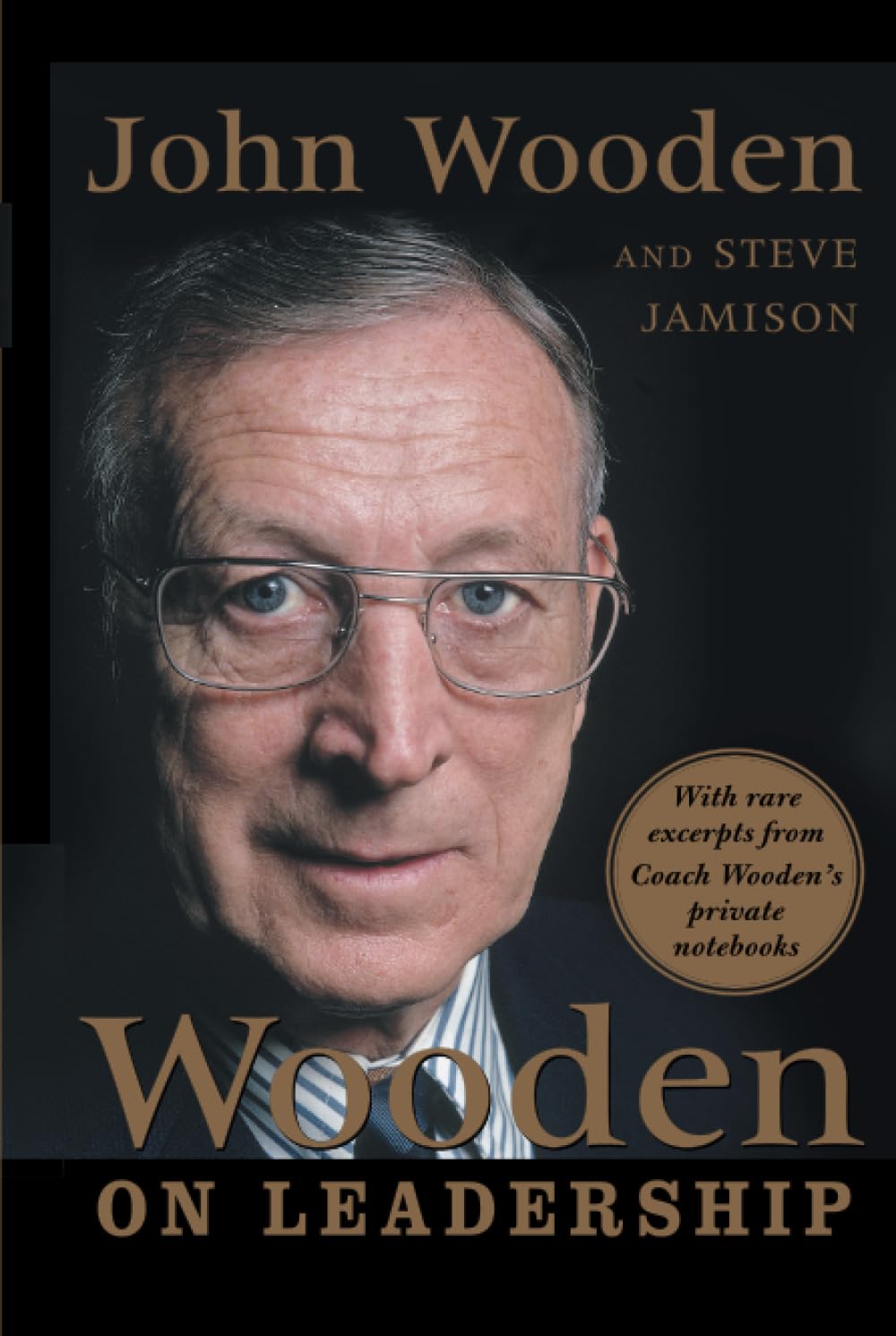
desertcart.com: Wooden on Leadership: How to Create a Winning Organization: 8580001072067: John Wooden, Steve Jamison: Books Review: Achieve Competitive Greatness - In this book, coach John Wooden - one of the most successful basketball coaches of all times - shares with his readers the leadership framework that he has developed and used through the years. The books is divided intro three sections, the first presents and explains John's foundation of leadership, the pyramid of success. The framework, illustrated below, is composed of a number of qualities that build on each other and serve as reinforcement to achieve "competitive greatness". These include as a first tier: industriousness, friendship, loyalty, cooperation, and enthusiasm. The second tier, consists of self-control, alertness, initiative, and intentness. The third tier: condition, skill, and team spirit. The fourth tier: poise and confidence. Finally at the top of the pyramid, the culmination: competitive greatness. In the second section, John shares a number of personal lessons in leadership, that tie into the framework and help bring it to life. These include: Good values attract food people, call yourself a teacher, and seek significant change, to name a few. The last section is composed of extracts from John's personal notebook and ensuing lessons. What sets Coach Wooden's philosophy and books apart is best highlighted in the book's preface: "Dr. Albert Einstein and Coach Wooden share a similar brilliance; specifically, both mastered the complicated art of keeping it simple. " In addition, the numerous stories shared, help the reader understand how to apply the framework and the impact it can have. I highly recommend John's books to anyone looking at developing their personal leadership skills, at all levels. Below are excerpts from the book that I found particularly insightful: 1- "The joy and great satisfaction I derived from leadership - working with and teaching others, helping them reach their full potential in contributing to the team's common goals - ultimately surpassed outscoring an opponent, the standings, even championships." 2- "I believe leadership itself is largely learned...Whatever coaching and leadership skills I possess were learned through listening, observation, study, then trial and error along the way." 3- "It's like character and reputation. Reputation is what others perceive you as being, and their opinion may be right or wrong. Character, however, is what you really are, and nobody truly knows that but you. But you are what matters most." 4- "Rules to lead by...Before you can lead others, you must be able to lead yourself...Don't hastily replace the old fashioned with the new fangled...Learn to master the four P's (planning, preparation, practice, and performance...Write down the tasks, initiatives, and actions that each member of your team needs to do to perform at his or her peak level." 5- "...Poise can be a most elusive quality in challenging times...Poise means holding fast to your beliefs and acting in accordance with them, regardless of how bad or good the situation may be. Poise means avoiding pose or pretense, comparing yourself to others, and acting like someone you're not. Poise means having a brave heart in all circumstances." 6- "Good values are like a magnet - they attract good people." 7- "A good leader creates belief - in the leader's philosophy, in the organization in the mission. Creating belief is difficult to do where a vacuum of values exists, where the only thing that matters is the end result, whether it's beating the competition on the court or increasing the profit margins in the books." 8- "...and while all these will make you a good leader, they will not make you a great leader. For that, one additional quality - perhaps the most important of all - is necessary. Although it may sound out of place in the rough-and-tumble context of sports or corporate competition, I believe you must have love in your heart for the people under your leadership...love is so important because it moves you to do the right things in all areas of life, including leadership." 9- "The coach must never forget that he is, first of all, a teacher. He must come (be present), see (diagnose), and conquer (correct). He must continuously be exploring for ways to improve himself in order that he may improve others and welcome every person and everything that maybe helpful to him. As has been said, he must remember, "Others, too, have brains." 10- "In business and other organizations, the "ball" that must be shared is knowledge, experience, information, contacts, new ideas, and much more. All these things must be freely exchanged with others throughout the organization if it is going to succeed - prevail - in these extremely competitive times." 11- "While the specifics may be small, it is no small task. Success, not the devil, is in the details." 12- "I came to the conclusion that when choosing between the carrot and the stick as a motivational tool, the well chosen carrot was almost always more powerful and longer lasting than the stick. In fact, simply withholding a properly selected carrot can become a most forceful punishment and powerful motivator. Its denial creates desire; the carrot becomes a stick." 13- "Make it clear to all that "promotions" depend on mastery of current roles and assignments. Never discourage ambition, but do let people know that they need to keep their eye on the ball in their current jobs. Their time may come, but only if they exercise patience and demonstrate continuous improvement." 14- "Getting off to a good start is important. It sets the tone for your team in many ways - expectations, values, attitude, behavior, rules, and much more. This is especially true with individuals who are new to your organization, but it also applies to the others under your leadership who may need a reminder from time to time of how you epect things to be done." Review: Good book - A wooden book who could go wrong


| Best Sellers Rank | #12,424 in Books ( See Top 100 in Books ) #10 in Basketball Biographies (Books) #124 in Motivational Management & Leadership #211 in Leadership & Motivation |
| Customer Reviews | 4.8 4.8 out of 5 stars (1,589) |
| Dimensions | 6.24 x 0.91 x 9.24 inches |
| Edition | First Edition |
| ISBN-10 | 0071453393 |
| ISBN-13 | 978-0071453394 |
| Item Weight | 2.31 pounds |
| Language | English |
| Print length | 302 pages |
| Publication date | April 5, 2005 |
| Publisher | McGraw Hill |
O**H
Achieve Competitive Greatness
In this book, coach John Wooden - one of the most successful basketball coaches of all times - shares with his readers the leadership framework that he has developed and used through the years. The books is divided intro three sections, the first presents and explains John's foundation of leadership, the pyramid of success. The framework, illustrated below, is composed of a number of qualities that build on each other and serve as reinforcement to achieve "competitive greatness". These include as a first tier: industriousness, friendship, loyalty, cooperation, and enthusiasm. The second tier, consists of self-control, alertness, initiative, and intentness. The third tier: condition, skill, and team spirit. The fourth tier: poise and confidence. Finally at the top of the pyramid, the culmination: competitive greatness. In the second section, John shares a number of personal lessons in leadership, that tie into the framework and help bring it to life. These include: Good values attract food people, call yourself a teacher, and seek significant change, to name a few. The last section is composed of extracts from John's personal notebook and ensuing lessons. What sets Coach Wooden's philosophy and books apart is best highlighted in the book's preface: "Dr. Albert Einstein and Coach Wooden share a similar brilliance; specifically, both mastered the complicated art of keeping it simple. " In addition, the numerous stories shared, help the reader understand how to apply the framework and the impact it can have. I highly recommend John's books to anyone looking at developing their personal leadership skills, at all levels. Below are excerpts from the book that I found particularly insightful: 1- "The joy and great satisfaction I derived from leadership - working with and teaching others, helping them reach their full potential in contributing to the team's common goals - ultimately surpassed outscoring an opponent, the standings, even championships." 2- "I believe leadership itself is largely learned...Whatever coaching and leadership skills I possess were learned through listening, observation, study, then trial and error along the way." 3- "It's like character and reputation. Reputation is what others perceive you as being, and their opinion may be right or wrong. Character, however, is what you really are, and nobody truly knows that but you. But you are what matters most." 4- "Rules to lead by...Before you can lead others, you must be able to lead yourself...Don't hastily replace the old fashioned with the new fangled...Learn to master the four P's (planning, preparation, practice, and performance...Write down the tasks, initiatives, and actions that each member of your team needs to do to perform at his or her peak level." 5- "...Poise can be a most elusive quality in challenging times...Poise means holding fast to your beliefs and acting in accordance with them, regardless of how bad or good the situation may be. Poise means avoiding pose or pretense, comparing yourself to others, and acting like someone you're not. Poise means having a brave heart in all circumstances." 6- "Good values are like a magnet - they attract good people." 7- "A good leader creates belief - in the leader's philosophy, in the organization in the mission. Creating belief is difficult to do where a vacuum of values exists, where the only thing that matters is the end result, whether it's beating the competition on the court or increasing the profit margins in the books." 8- "...and while all these will make you a good leader, they will not make you a great leader. For that, one additional quality - perhaps the most important of all - is necessary. Although it may sound out of place in the rough-and-tumble context of sports or corporate competition, I believe you must have love in your heart for the people under your leadership...love is so important because it moves you to do the right things in all areas of life, including leadership." 9- "The coach must never forget that he is, first of all, a teacher. He must come (be present), see (diagnose), and conquer (correct). He must continuously be exploring for ways to improve himself in order that he may improve others and welcome every person and everything that maybe helpful to him. As has been said, he must remember, "Others, too, have brains." 10- "In business and other organizations, the "ball" that must be shared is knowledge, experience, information, contacts, new ideas, and much more. All these things must be freely exchanged with others throughout the organization if it is going to succeed - prevail - in these extremely competitive times." 11- "While the specifics may be small, it is no small task. Success, not the devil, is in the details." 12- "I came to the conclusion that when choosing between the carrot and the stick as a motivational tool, the well chosen carrot was almost always more powerful and longer lasting than the stick. In fact, simply withholding a properly selected carrot can become a most forceful punishment and powerful motivator. Its denial creates desire; the carrot becomes a stick." 13- "Make it clear to all that "promotions" depend on mastery of current roles and assignments. Never discourage ambition, but do let people know that they need to keep their eye on the ball in their current jobs. Their time may come, but only if they exercise patience and demonstrate continuous improvement." 14- "Getting off to a good start is important. It sets the tone for your team in many ways - expectations, values, attitude, behavior, rules, and much more. This is especially true with individuals who are new to your organization, but it also applies to the others under your leadership who may need a reminder from time to time of how you epect things to be done."
K**H
Good book
A wooden book who could go wrong
D**N
Do you have a yelling/screaming leader or boss that loses emotional control? Give them this book!!!
Wooden on Leadership is one of the best leadership books I have ever read. The two themes I like most are below and then my top 20 highlights from the book are provided. Theme 1 - One of the primary things I like about Wooden’s leadership style is that he believes in maintaining emotional control at all times. He wants intensity not emotionalism and there is a difference. . Comments - Too many times I encounter leaders that actually prohibit effectiveness because they have not managed to control their emotions. Unfortunately the media, especially the sports media mistakenly regularly convey that emotional displays or outbursts are leadership in action. . Theme 2 - Wooden believes the best leaders are lifelong learners. . Comments - This is absolutely true, but the challenge we have is making time for the learning. Leadership training and reading books on leadership is not primarily about getting new techniques. If you are experienced often you know the majority of what’s out there. Leadership training and reading books on leadership is about regulating behavior. We read the leadership books and take the training to assure we are performing according to what we know. I cannot even tell you how many times someone has come up to me after a leadership class and said some form of “you reminded me of many things I know and used to do but I had gotten away from them.” Leadership is a skill that involves fundamentals and subtleties and without continual review performance suffers. Professional sports teams don’t just practice the skills and plays they already know to occupy time, if they don’t practice what they already know performance suffers. They have to make time for practice. Learning is not just the acquisition of new knowledge it is also the reinforcement of what we already know. We have to make time for it. What was the last leadership book your boss read? What was the last leadership book you read? . My top 20 highlights from Wooden on Leadership . 1. Mutual respect and camaraderie strengthen your team. Affection, in fact, may weaken it by causing you to play favorites. . 2. First and foremost, you are their leader, not their buddy. . 3. As a leader you must be sincerely committed to what’s right rather than who’s right. . 4. For many years I’ve described one of the differences between a good leader and a prison guard is cooperation. When you carry a rifle it is unnecessary to listen... . 5. Self-Control in little things leads to control of bigger things. For example, the reason I prohibited profanity – a small issue – during practices was because it was usually caused by frustration or anger. I felt that a player who couldn’t control his language when he got upset during a scrimmage would be more likely to lose control in more damaging ways during the heat of competition – fouling, fighting, or making other poor decisions that would almost always hurt the team. . 6. Hesitancy, indecisiveness, vacillation, and fear of failure are not characteristics I associate with good leadership. I told our team many times: “Be quick, but don’t hurry.” By that I meant to make a decision, take action, decide what you’re going to do and do it. Keep this word of caution in mind: “Failure to act is often the biggest failure of all.” . 7. Mistakes, even failure, can be permissible so long as they do not result from carelessness or poor preparation . 8. “The one who once most wisely said, ‘Be sure you’re right, then go ahead.’ Might have added this to it, ‘Be sure you are wrong before you quit.’” . 9. The best leaders are lifelong learners, they take measures to create organizations that foster and inspire learning throughout. The most effective leaders are those who realize it’s what you know after you know it all that counts most. . 10. Benjamin Franklin understood its value quite well: “Genius is nothing but a greater aptitude for patience.” . 11. “I will not like you all the same, but I will love you all the same. And whether I like you are not, my feelings will not interfere with my judgment of your effort and performance. You will be treated fairly. That’s a promise.” . 12. Nobody cares how much you know (until they know how much you care). . 13. That’s when I began announcing that the team members wouldn’t be treated the same or alike; rather, each one would receive the treatment they earned and deserved. . 14. Do not equate professional expertise with your ability to teach it. . 15. I prize intensity and fear emotionalism. Consistency in high performance and production is a trademark of effective and successful organizations and those who lead them. Emotionalism destroys consistency. A leader who is ruled by emotions, whose temperament is mercurial, produce a team whose trademark is roller coaster-ups and downs in performance; unpredictability and un-dependability in effort and concentration; one day good, the next day bad. . 16. …emotional control is a primary component of consistency, which is in turn a component of success. . 17. A volatile leader is like a bottle of nitroglycerine. The slightest knock and it blows up. Those around nitroglycerine or a temperamental boss spend all their time carefully tiptoeing back and forth rather than doing their jobs. It is not an environment, in my opinion conducive to winning organizations. . 18. Managing egos-the over- and underinflated, the forceful and the fragile- is one of the greatest challenges facing any leader. . 19. Explain to each team member precisely how his or her contributions connect to the welfare and success of the entire organization. . 20. PRIVATE AND PUBLIC PRAISE – Acknowledging top producers does not always have to be done publicly It is often effective for a leader to praise their outstanding performance when others are not around. It gives the “superstar” deserved recognition without creating resentment. Conversely, praise for those in lesser roles is often maximized by doing it in a more public manner. Dr. James T. Brown, Author, The Handbook of Program Management
A**E
Amazing book
M**S
There are not enough stars for this book. Yes a lot of it is common sense, yes a lot of it is not new but what makes it great is the consistency of philosophy and personality through this book. You know John Wooden lived all these principles daily and the book is as if he were standing next to you. I always struggle taking advice from sports book in to the real world as the principles are frequently not transferable or as effective outside the sports arena- but there is plenty of good advice if you want to listen
A**C
Histoire de la création de cette pyramide du succès. Anectodes, exemples de faits réels, très détaillé sur l'approche à utiliser aussi bien dans le sport qu'en entreprise. Je recommande.
D**N
This is a great book to read for those who aspired to be a leader. This one is there to revisit.
C**N
Buen libro 📖🙂
Trustpilot
1 month ago
2 weeks ago